Airtable
New pricing and migrations
tldr: Airtable completely refreshed its plans to drive more customers toward enterprise-grade plans. I owned E2E content design for onboarding to a net-new plan for small businesses, sensitive migrations experiences for existing users, and a high-vis pricing page redesign.
Problem: Our existing pricing and packaging model wasn’t effective in driving revenue, optimizing our sales resources, and enabling customers to progressively grow with Airtable. Many customers weren’t upgrading beyond our more expensive self-serve plan (Pro) because it was too feature-rich and there weren’t strong upgrade-drivers for our Enterprise plan.
Solution: This called for an overhaul of our pricing model, which meant deprecating one of the less popular self-serve plans (Plus) and introducing a new plan called Business aimed at small businesses and departments within larger organizations that need basic enterprise features (like SSO). Users needed to be able to sign up for Business self-serve, which would allow Sales to focus on our most valuable customers.
Along with these bigger changes, we also planned to introduce new limits onto each plan, redesign all of our upsells, and define how the migration from the old plans to the new plans would work.
My role: Led content design E2E across the Business plan onboarding, upsell redesign, plan migrations flows, and downgrade flows—all of which were sensitive in terms of customer trust and high-visibility internally.
Key partners: Product design, engineering, product management, product marketing, legal
What I learned: Designing for migrations where users are losing features and running into new limits is a study in risk mitigation. I knew users were going to be unhappy, so a lot of my work was just finding ways to make the experience suck a little bit less. The team also ended up needing to change course on the Plus plan deprecation due to some last-minute strategy shifts, so I worked closely with engineering to understand how we could improve the flow without needing to make big, risky changes right before launch.
Designs
Understanding our user
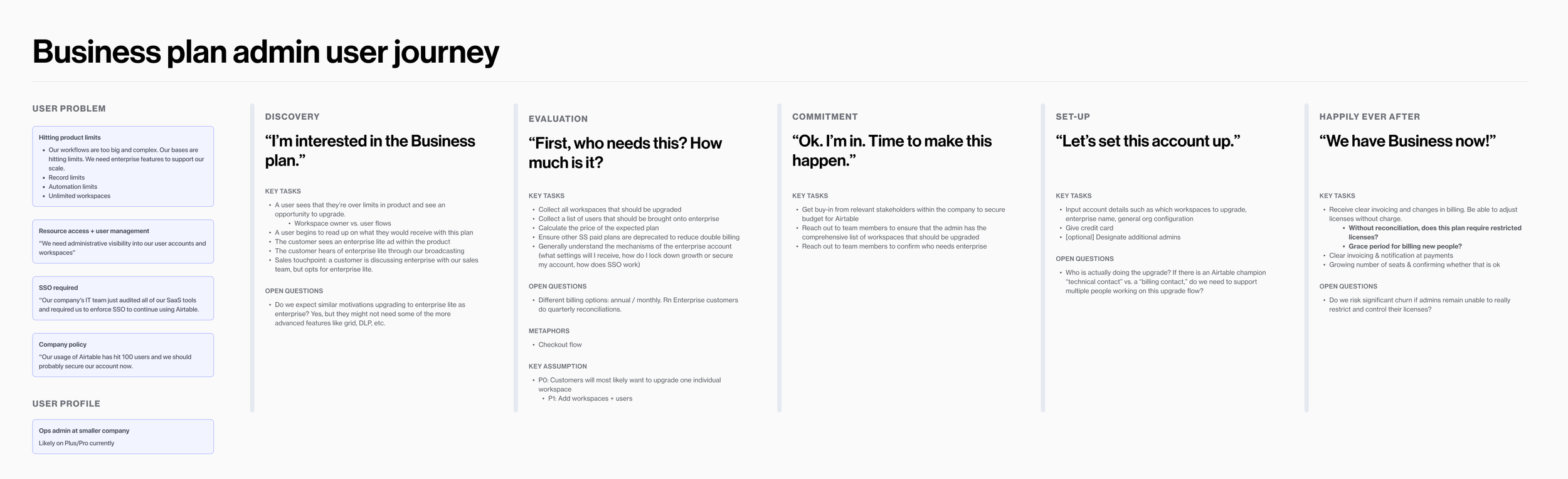
Our first step was to take some time to better understand the types of admins we were designing for on this plan. Based on conversations with Product and Sales, we learned that this admin is someone who is likely an Airtable champion within their organization in some type of ops role, but they may not be as familiar with enterprise tooling or billing processes. We also hypothesized that this customer may be running up against the limits of our self-serve plans and may need some basic enterprise features (like SSO), but may not be quite the right fit for the Enterprise plan.
Business plan onboarding
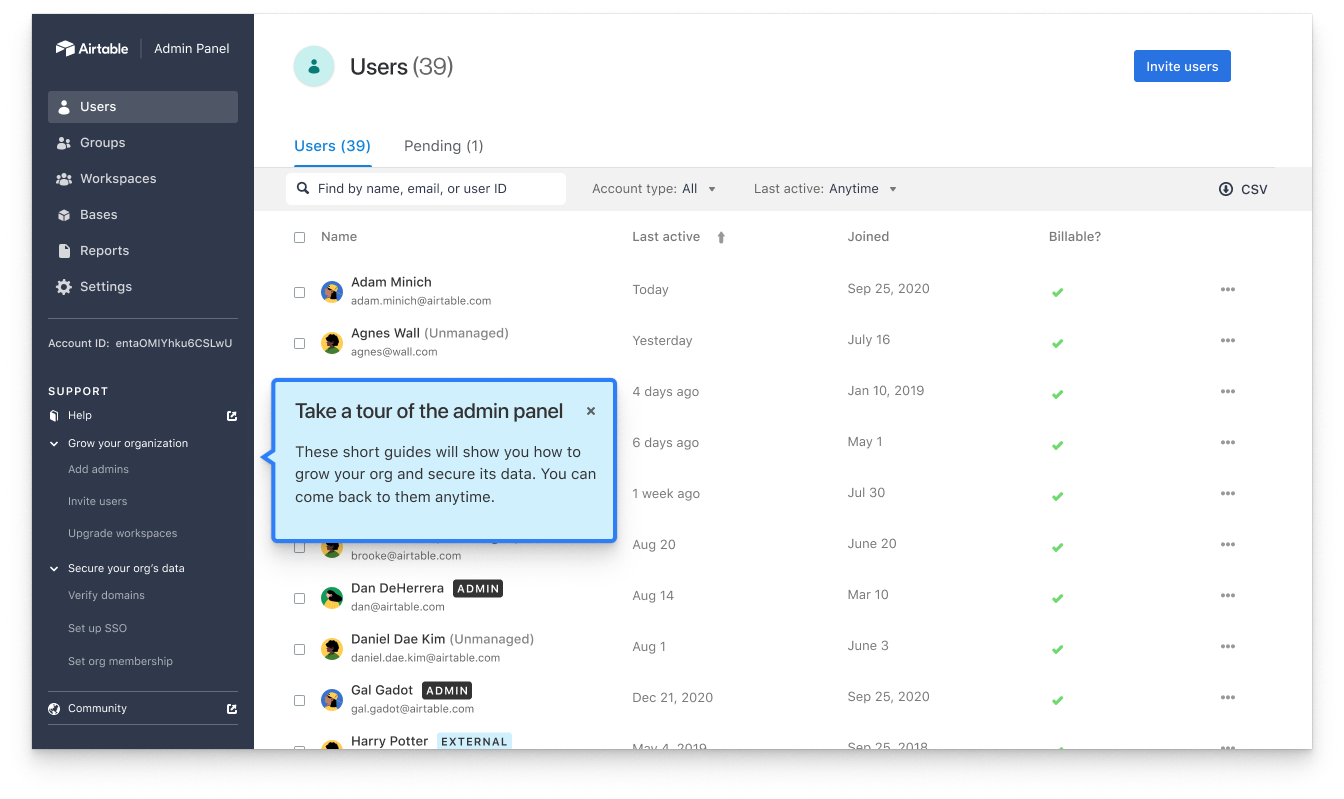
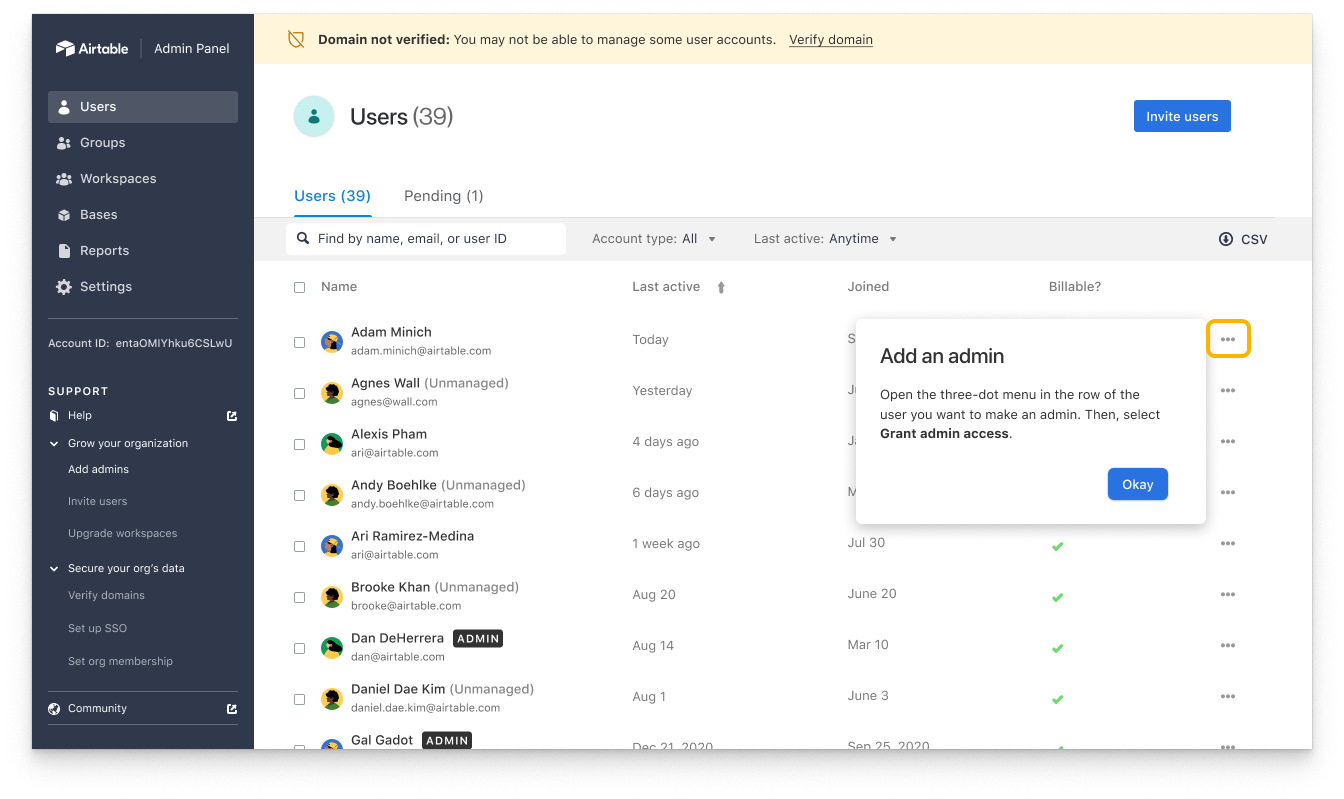
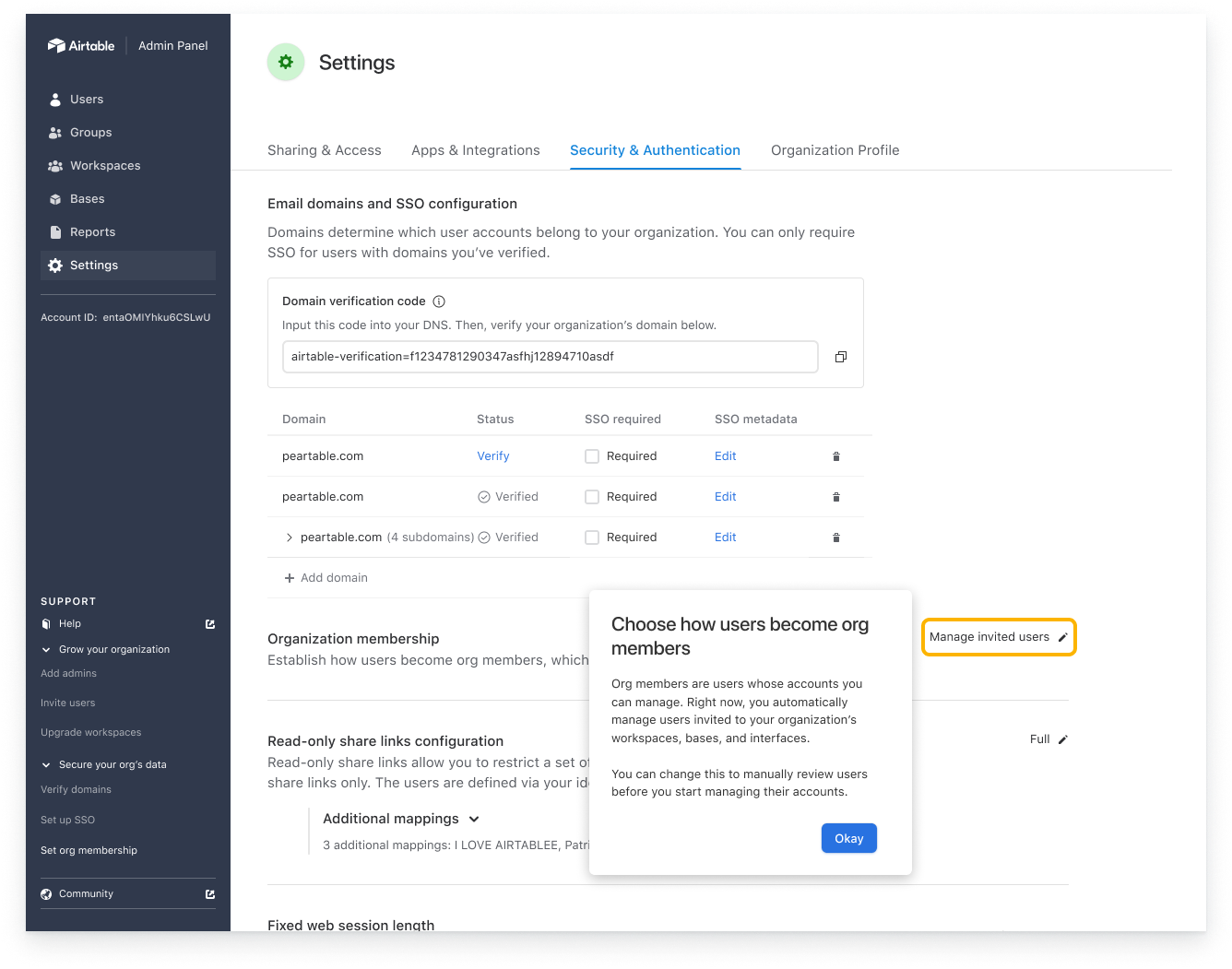
Setting up an Airtable organization—a container for all the customer’s Airtable workspaces—was previously a process supported by our Services teams. Now, we needed to make it easy-to-understand for a user who may not be familiar with other enterprise admin tools. I suggested splitting the flow into two parts—a focused onboarding wizard immediately after checkout that introduced the user to the most important admin concepts and a contextual onboarding tour that guided them through important setup steps in the admin panel.
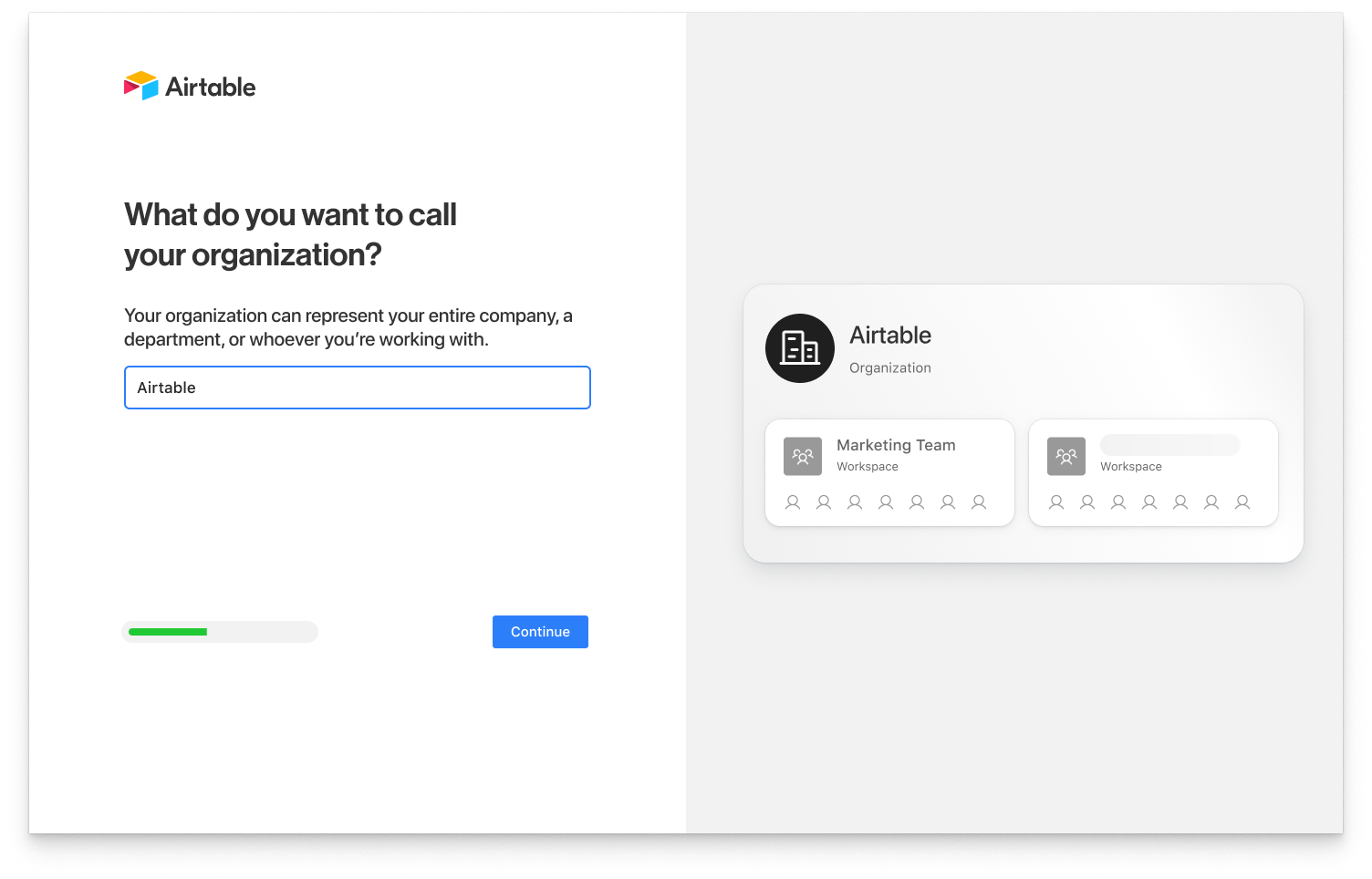
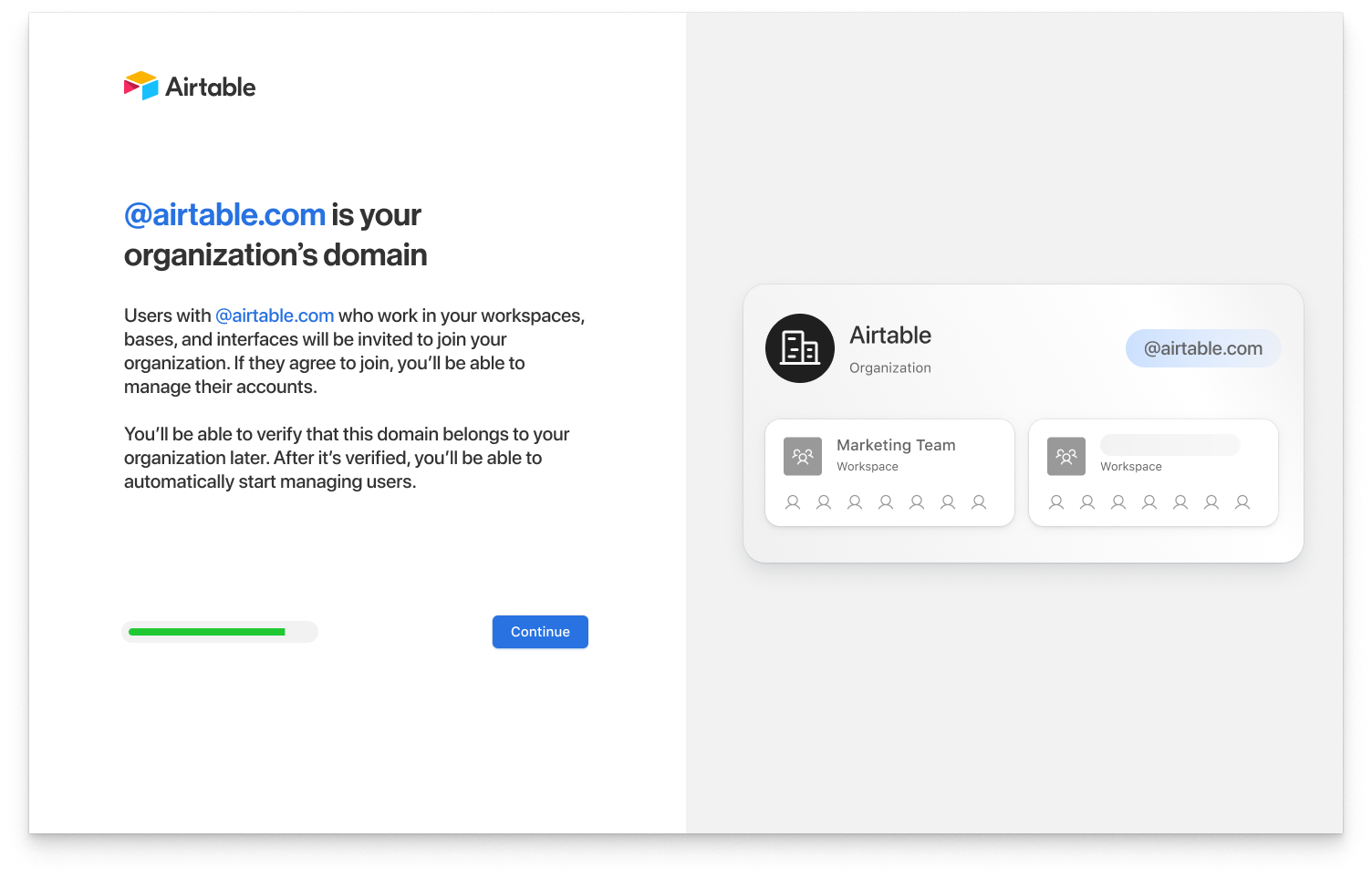
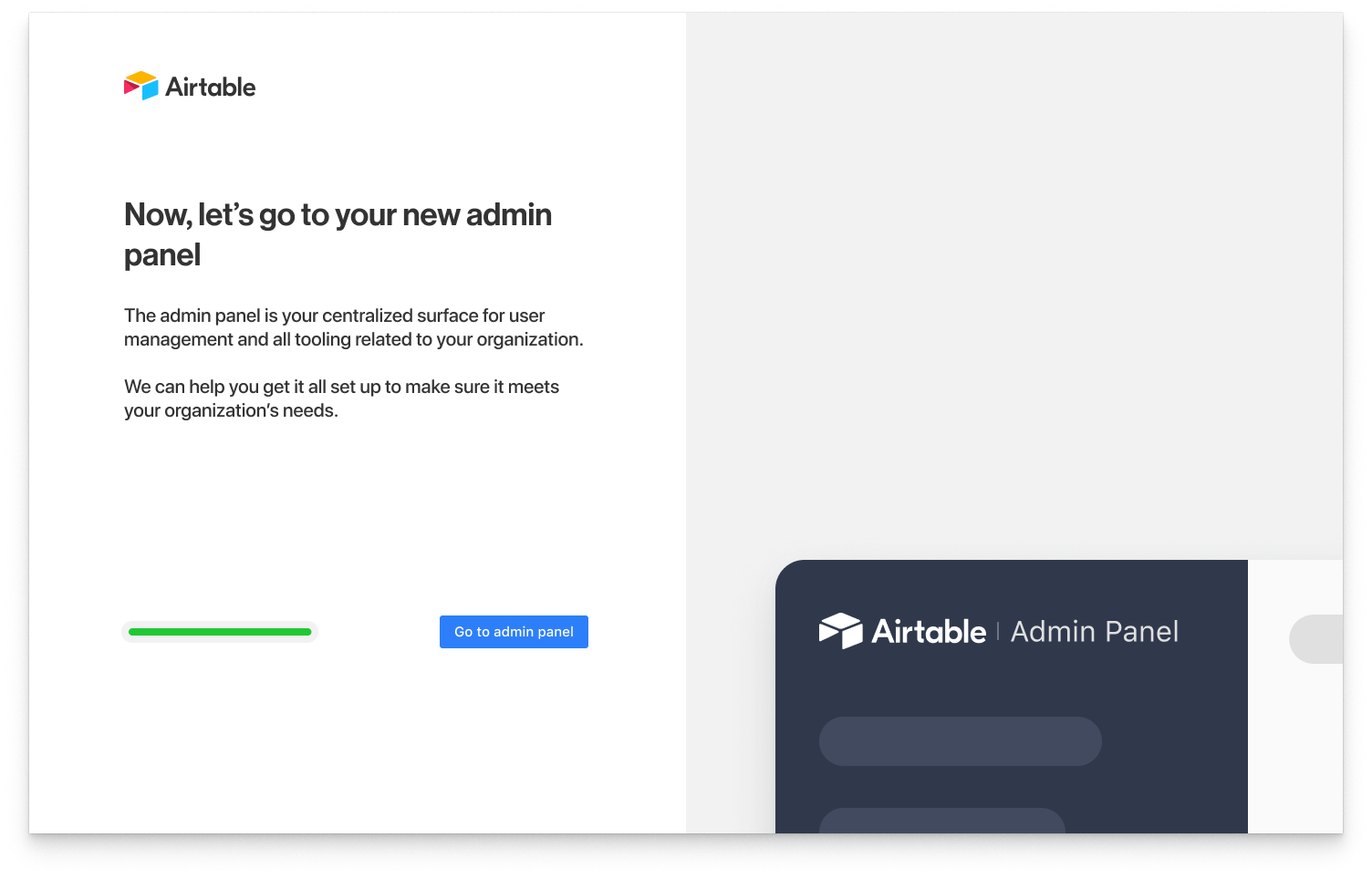
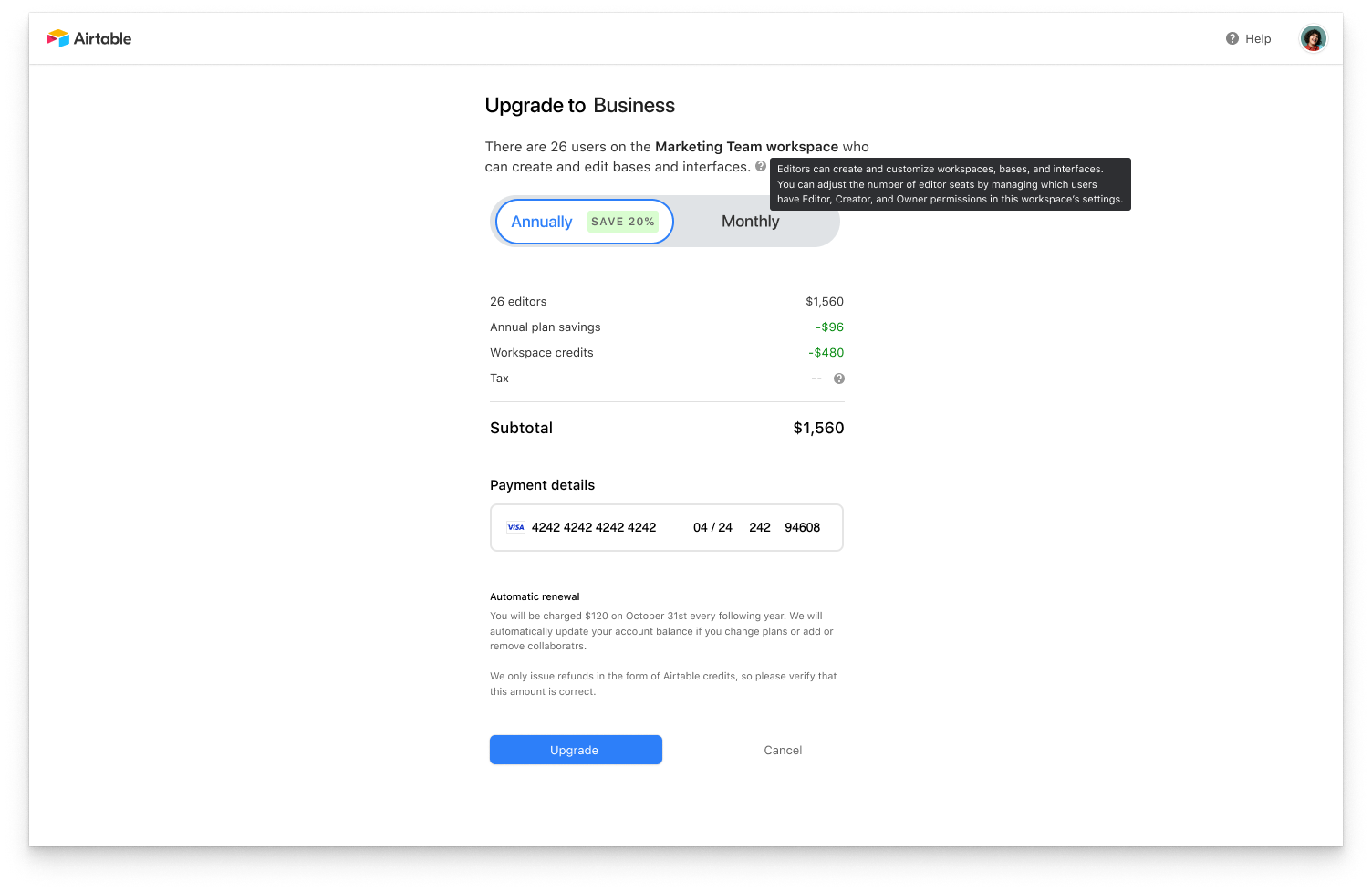
Checkout page: I advocated for a more transparent design that listed exactly which users would need paid licenses, but it was descoped by eng. I was able to get this tooltip in that directed users to their workspace settings, where they could edit users' permissions and change the number of paid licenses.
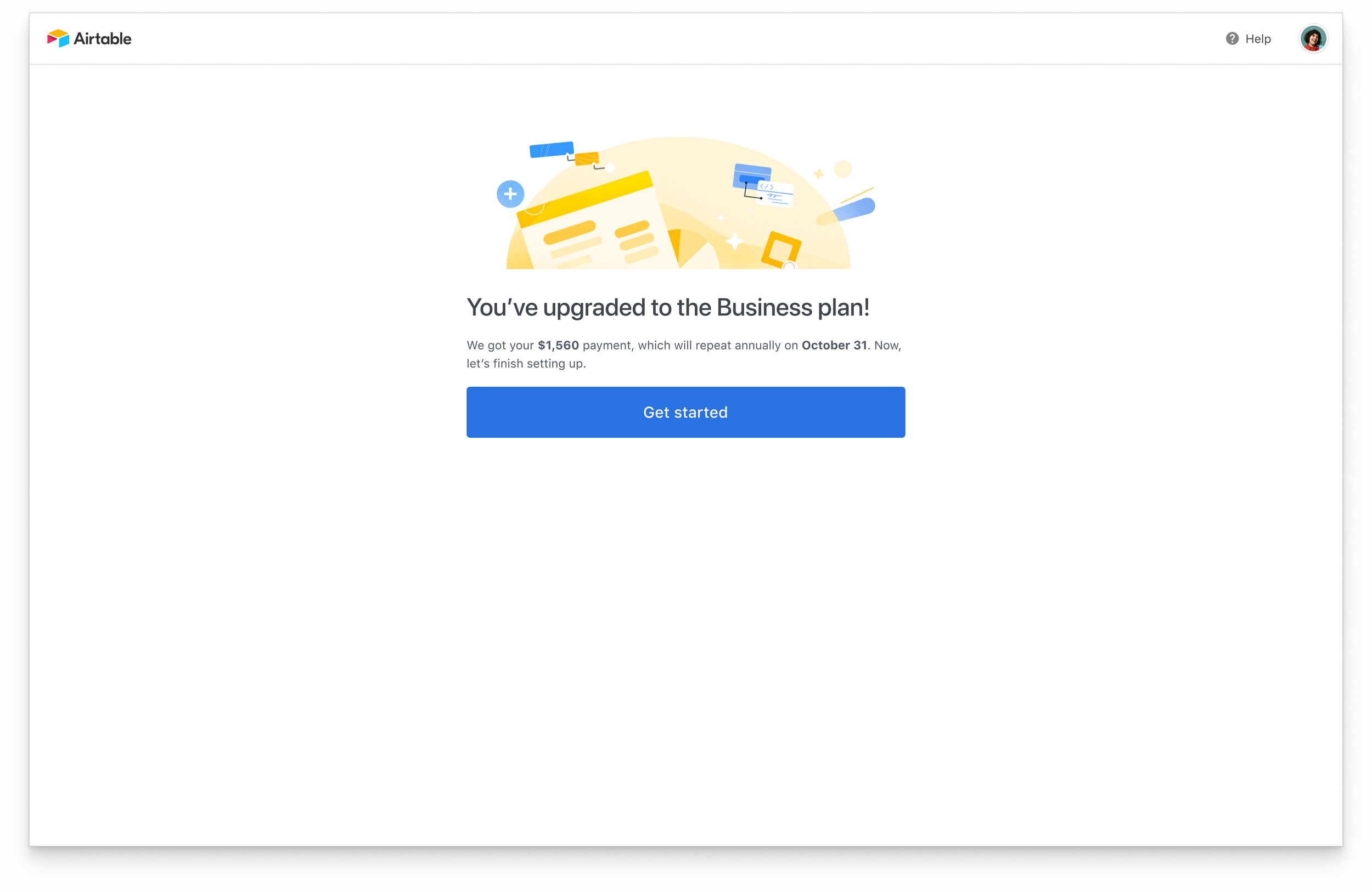
Payment confirmation: Reiterating the amount and annual billing date, especially since this is a more expensive plan and this could be a large amount of money paid upfront.
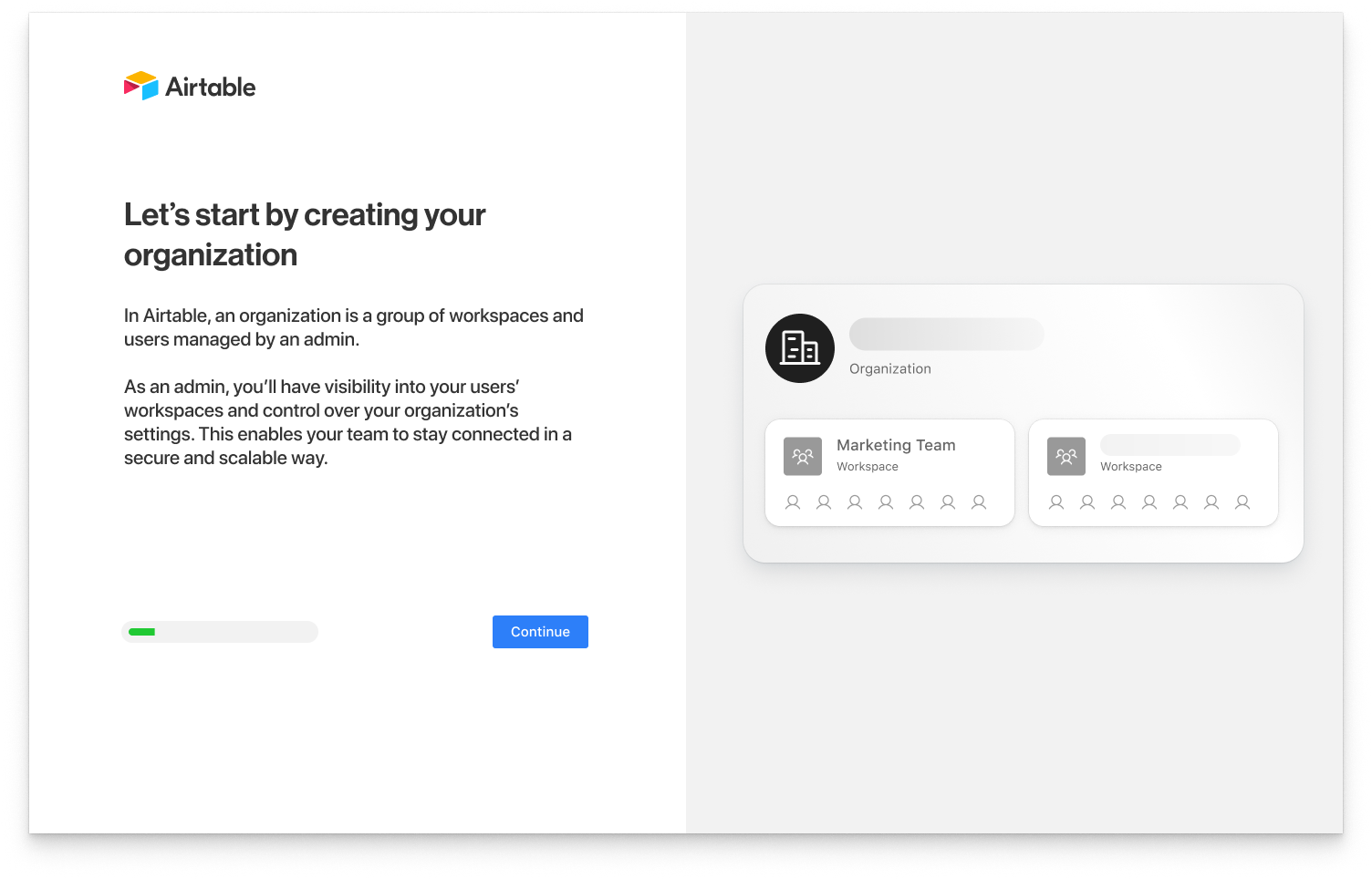
Organization primer: Introduces the concept of an organization within Airtable and explains why it's useful to an admin

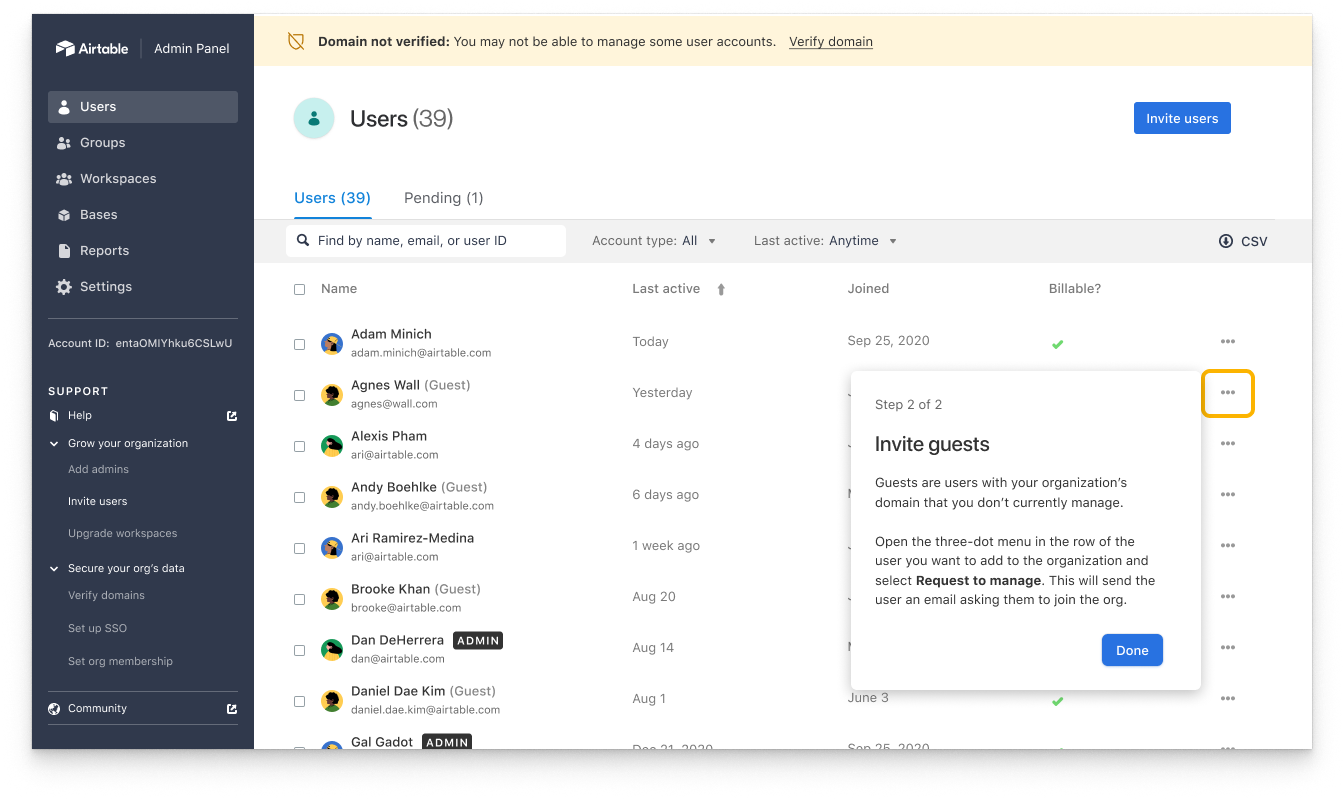
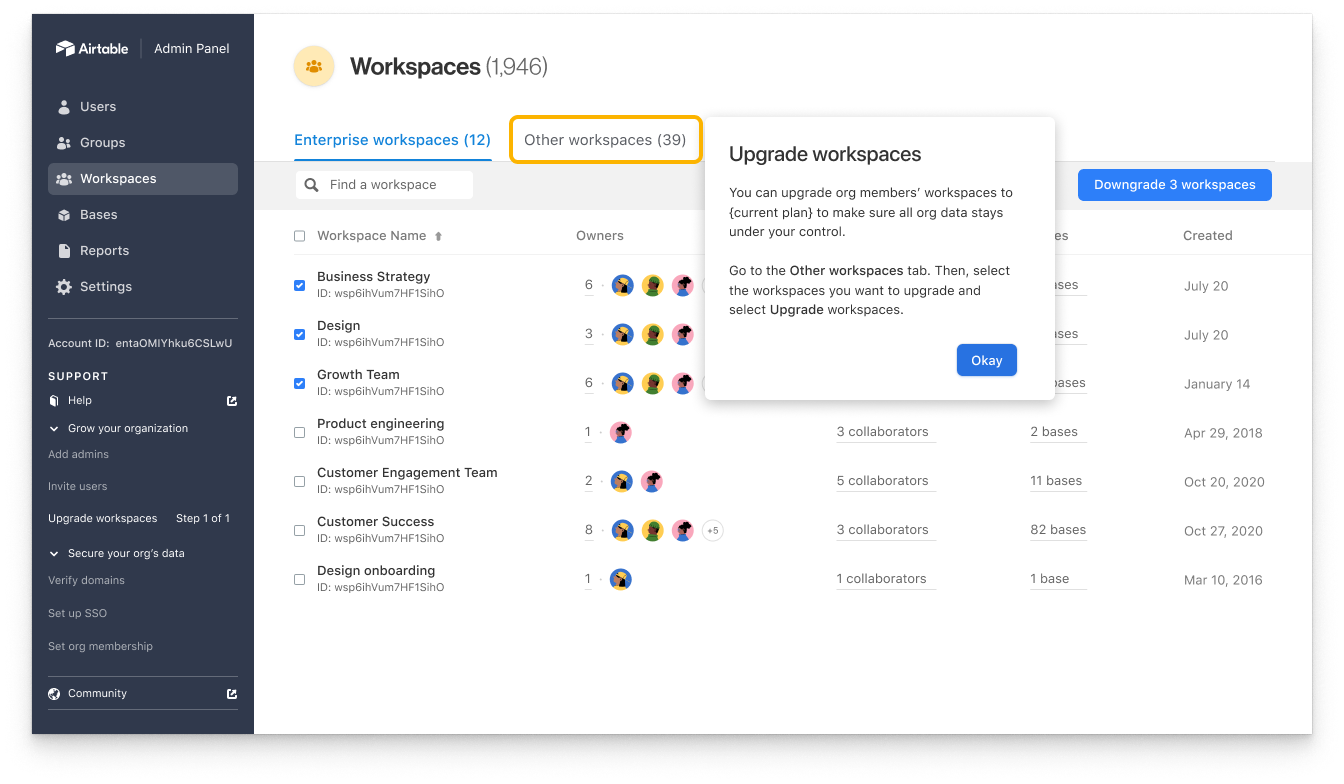
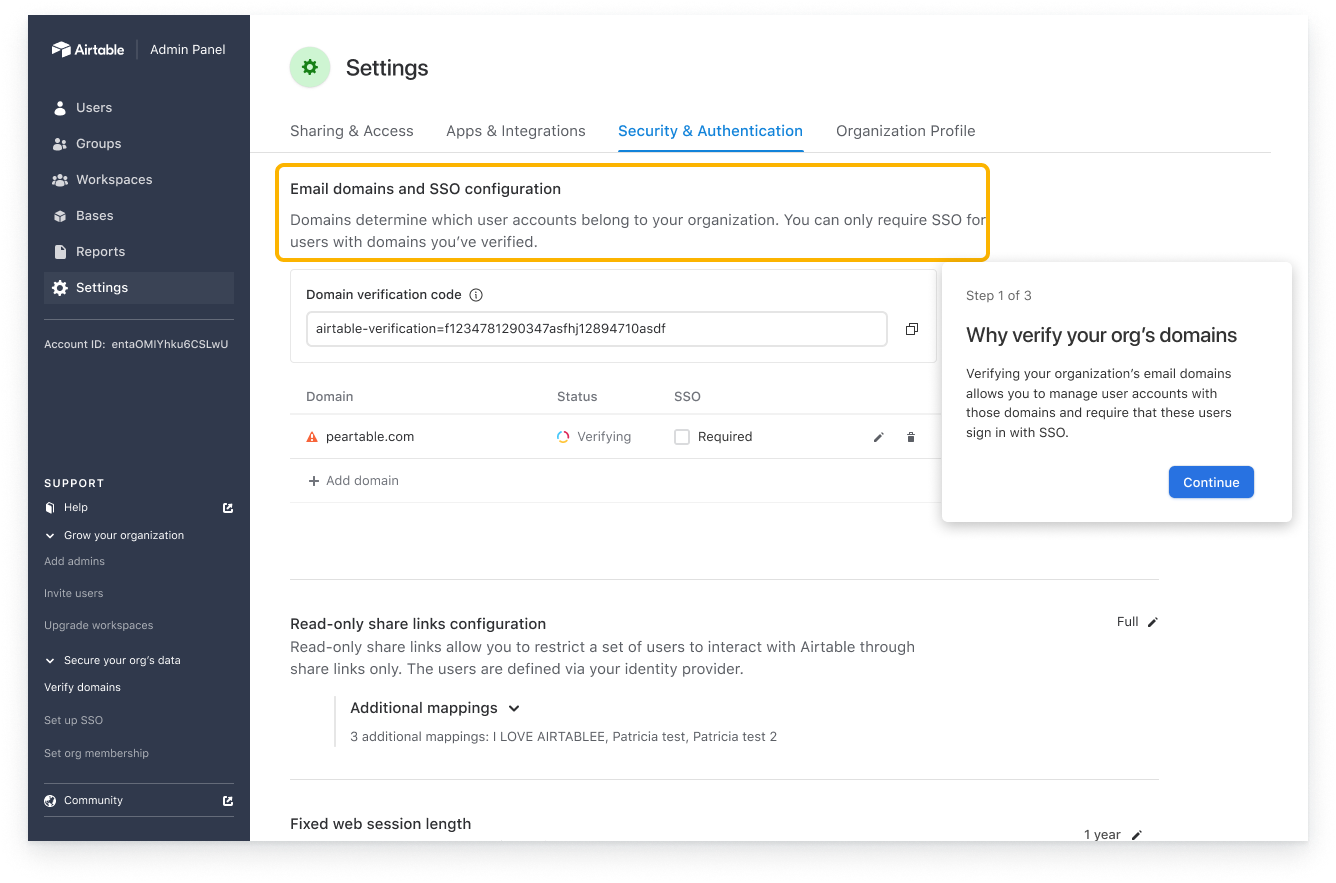
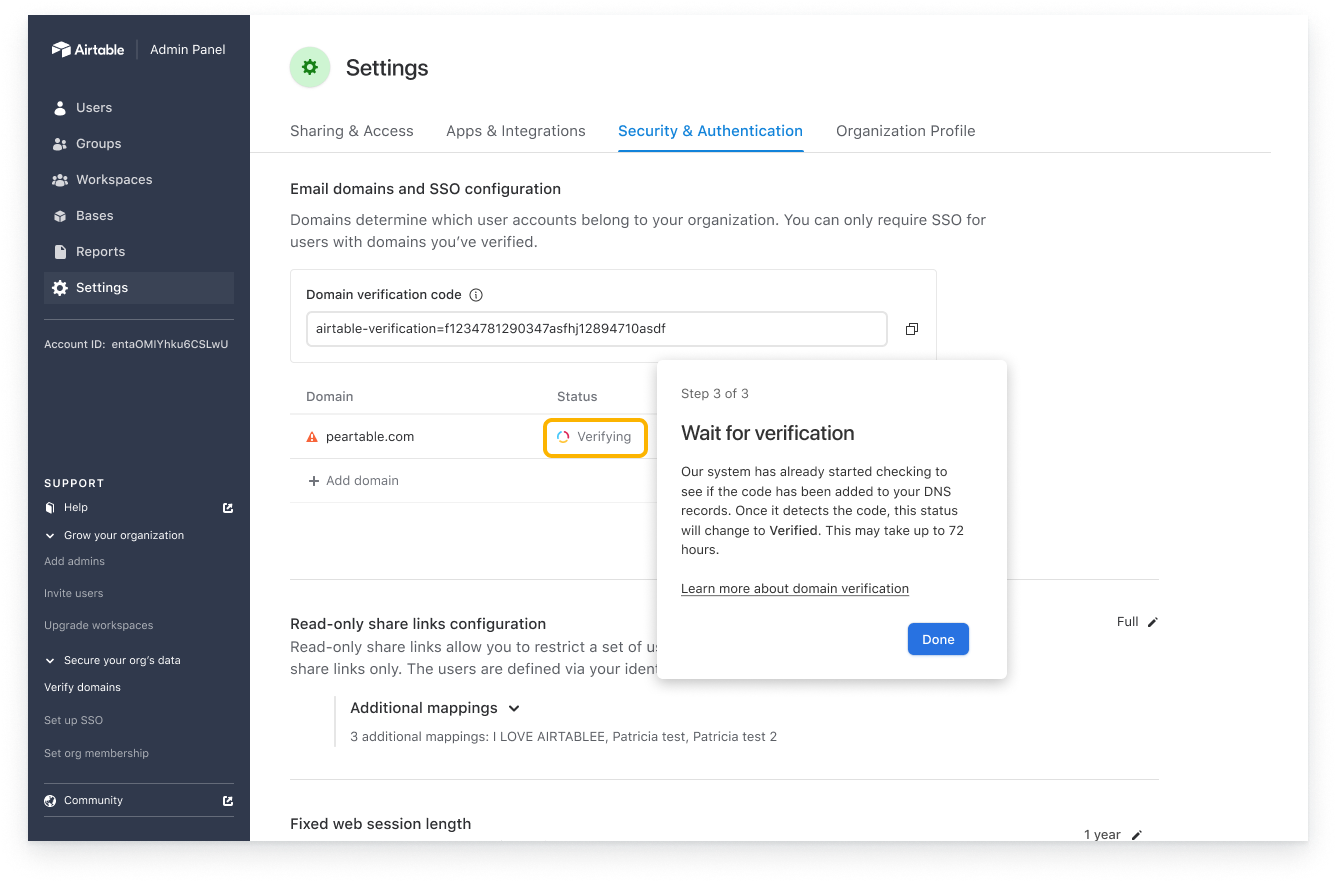
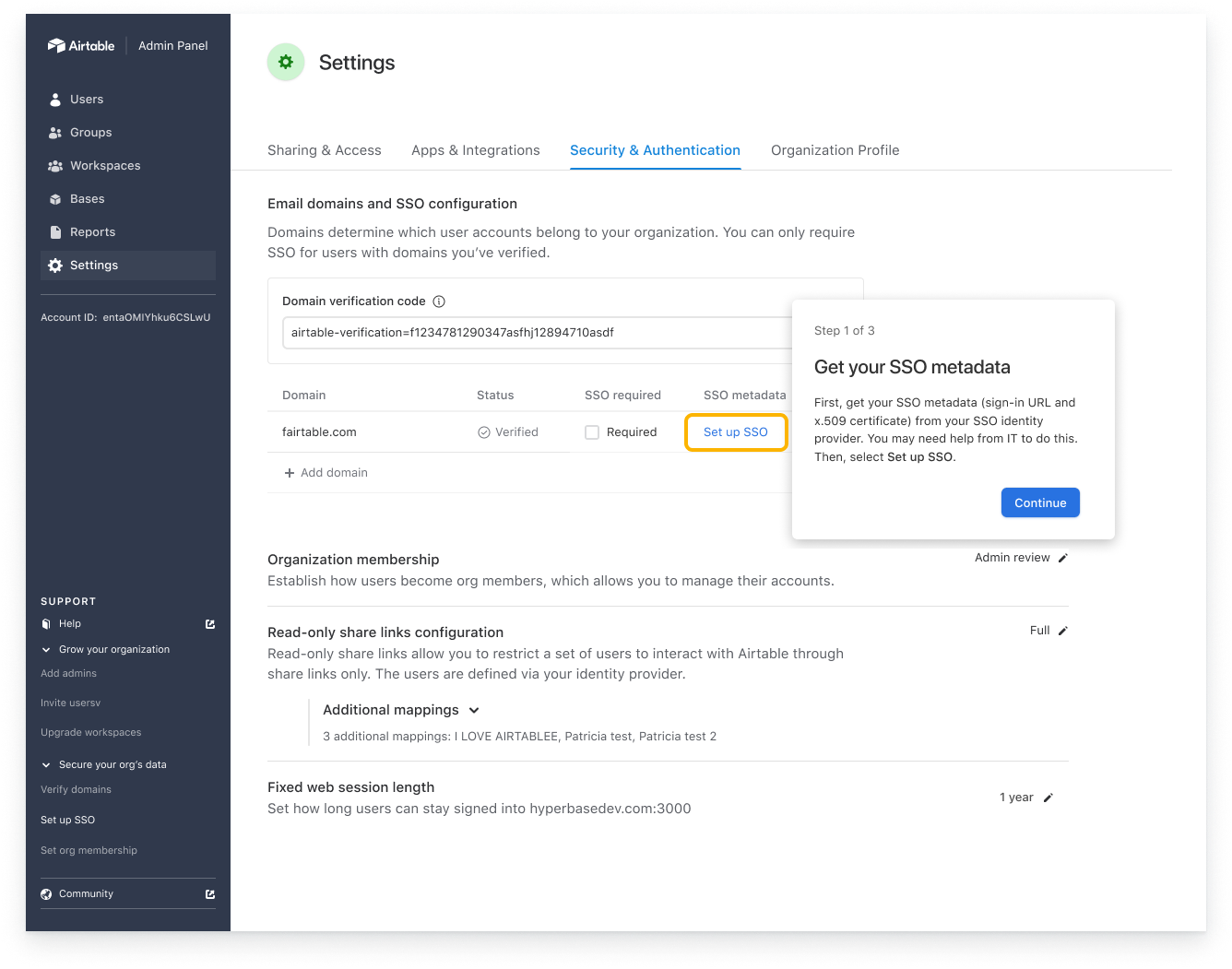
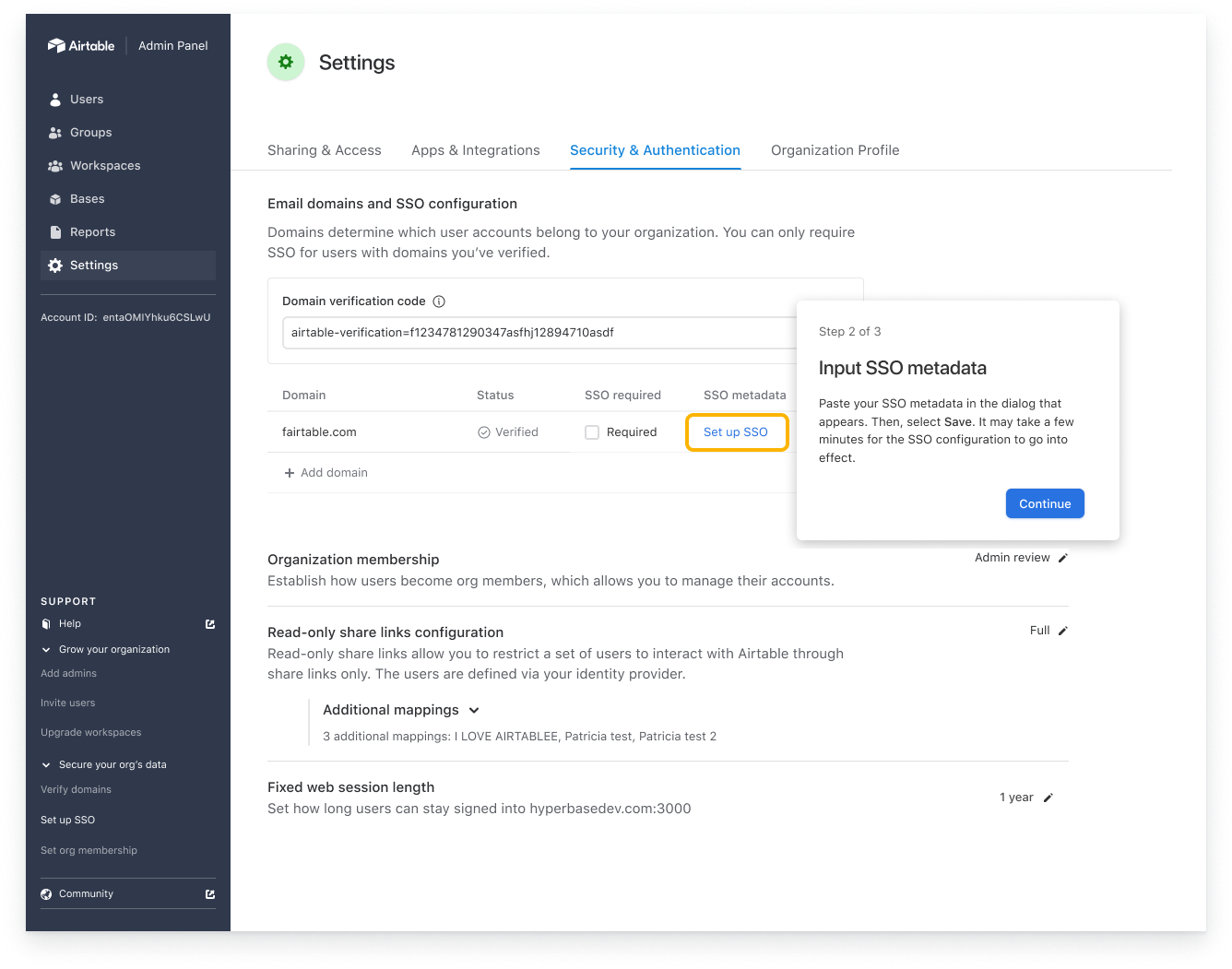

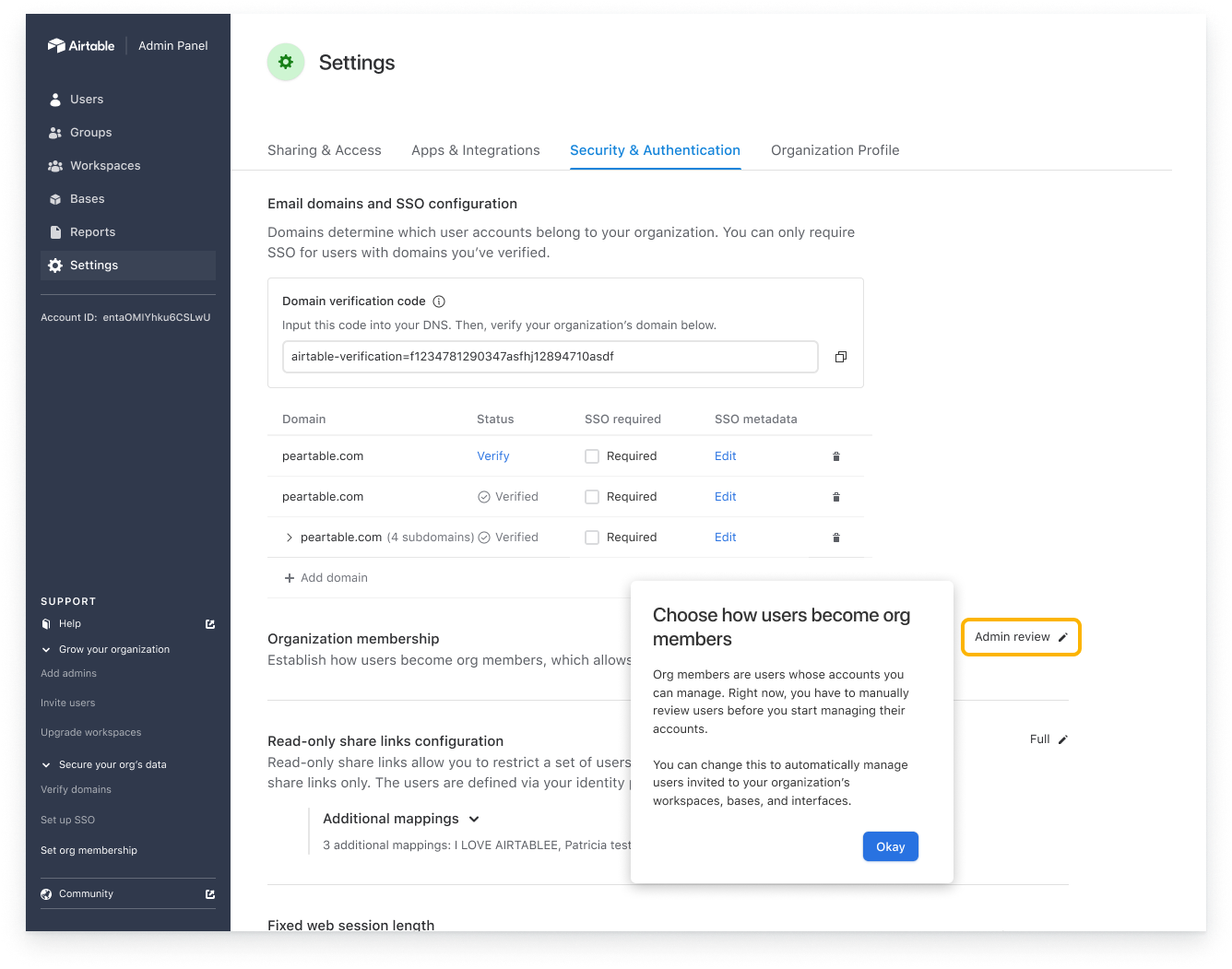
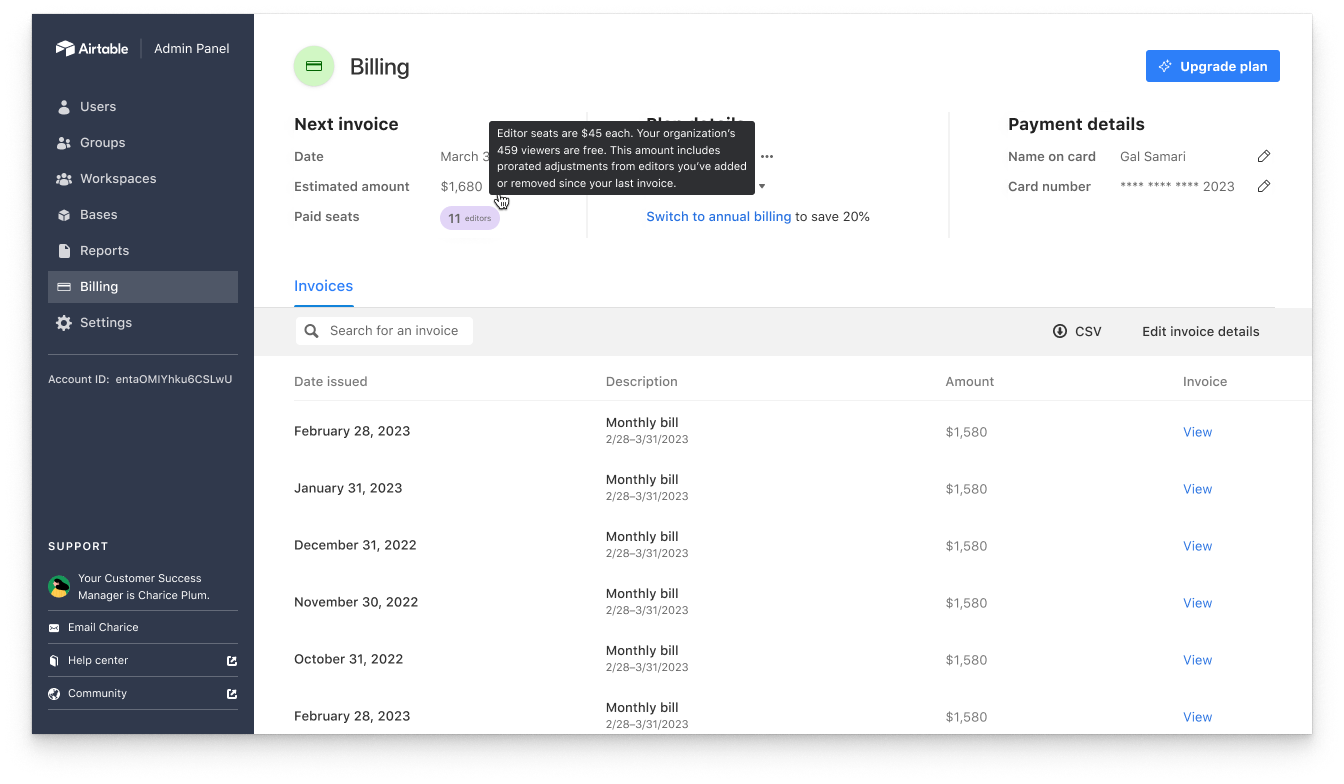
Billing page: This was a net-new page in the admin panel, as enterprise customers had previously only handled billing through our post-sales teams. Since Business admins don't have support from these teams, I advocated for more billing transparency on this page, which is why we added the "next invoice" section with details on how we were estimating their upcoming bill.
Pricing page
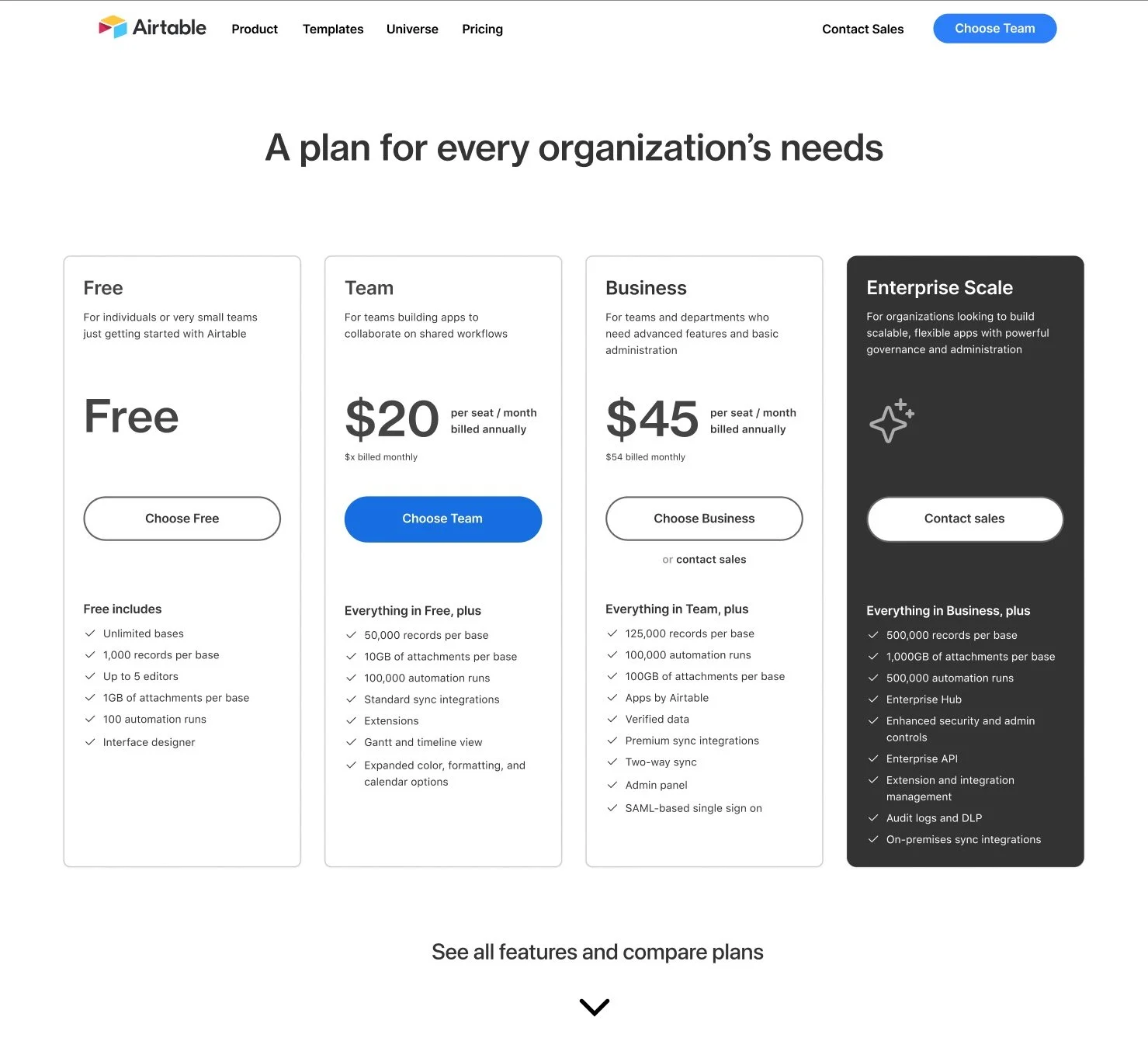
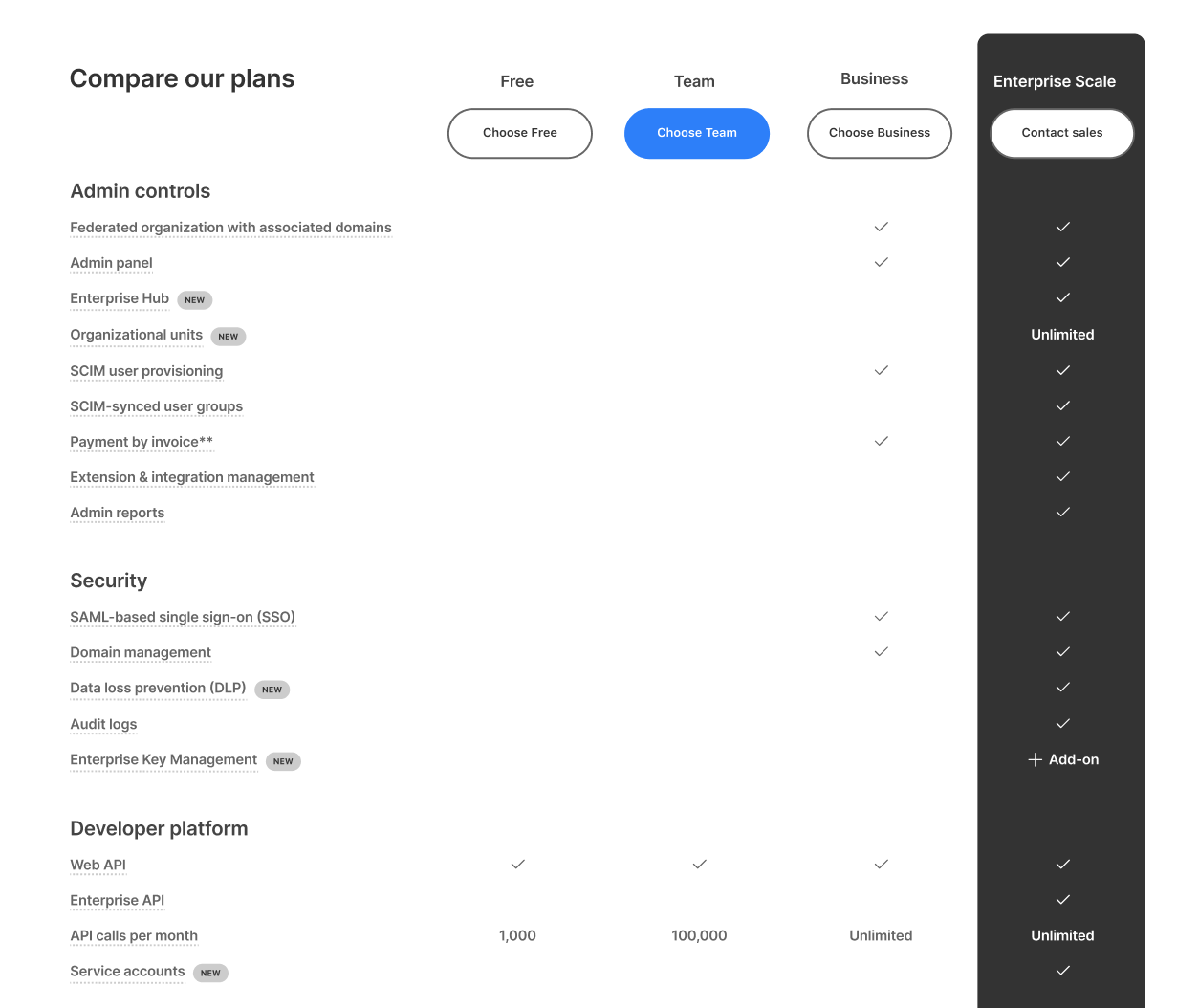
Our pricing page needed updating to correctly display the new plans and position reflect the company’s new enterprise focus. I partnered closely with product marketing to rewrite all the copy and worked with product design to simplify the page visually (minimizing color, removing icons). I also proposed a new IA, splitting out our admin-related features into distinct sections to mirror competitors’ pricing pages and help position Airtable as an enterprise-ready product.
Plan migrations
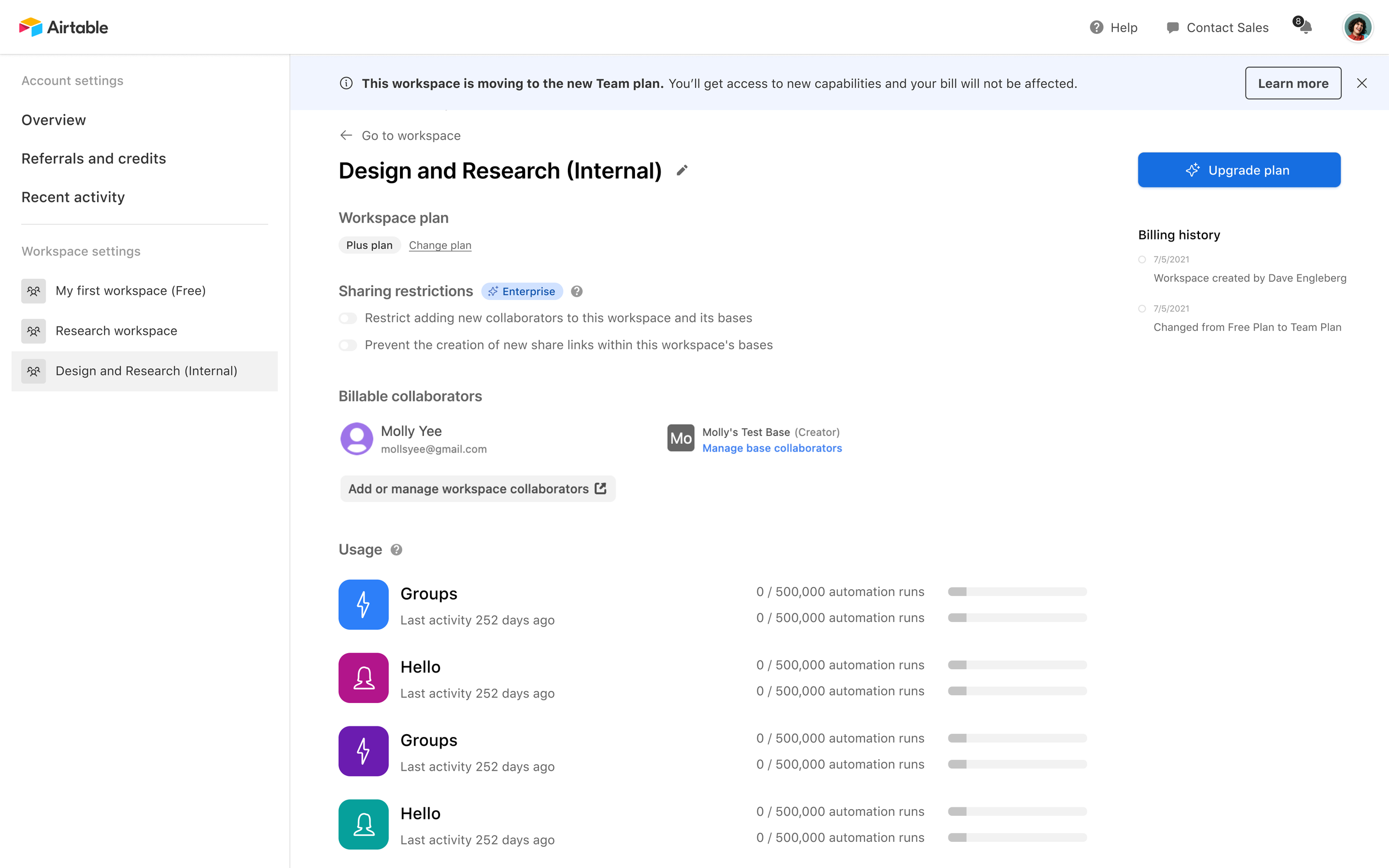
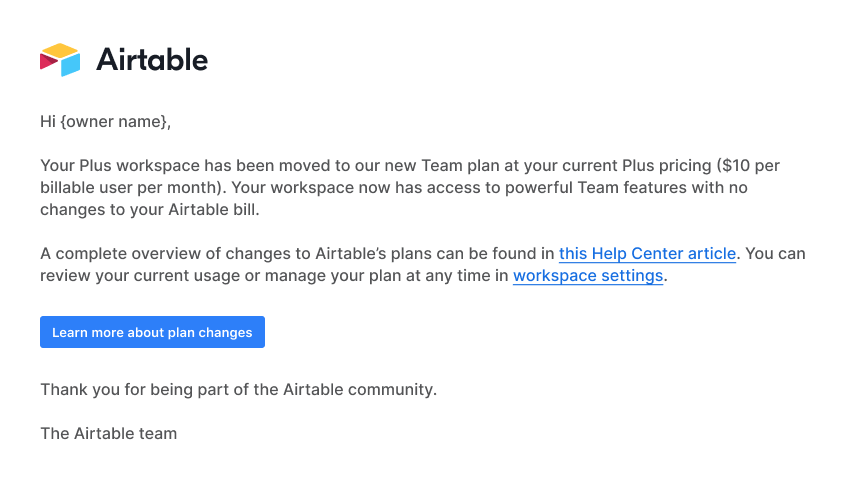
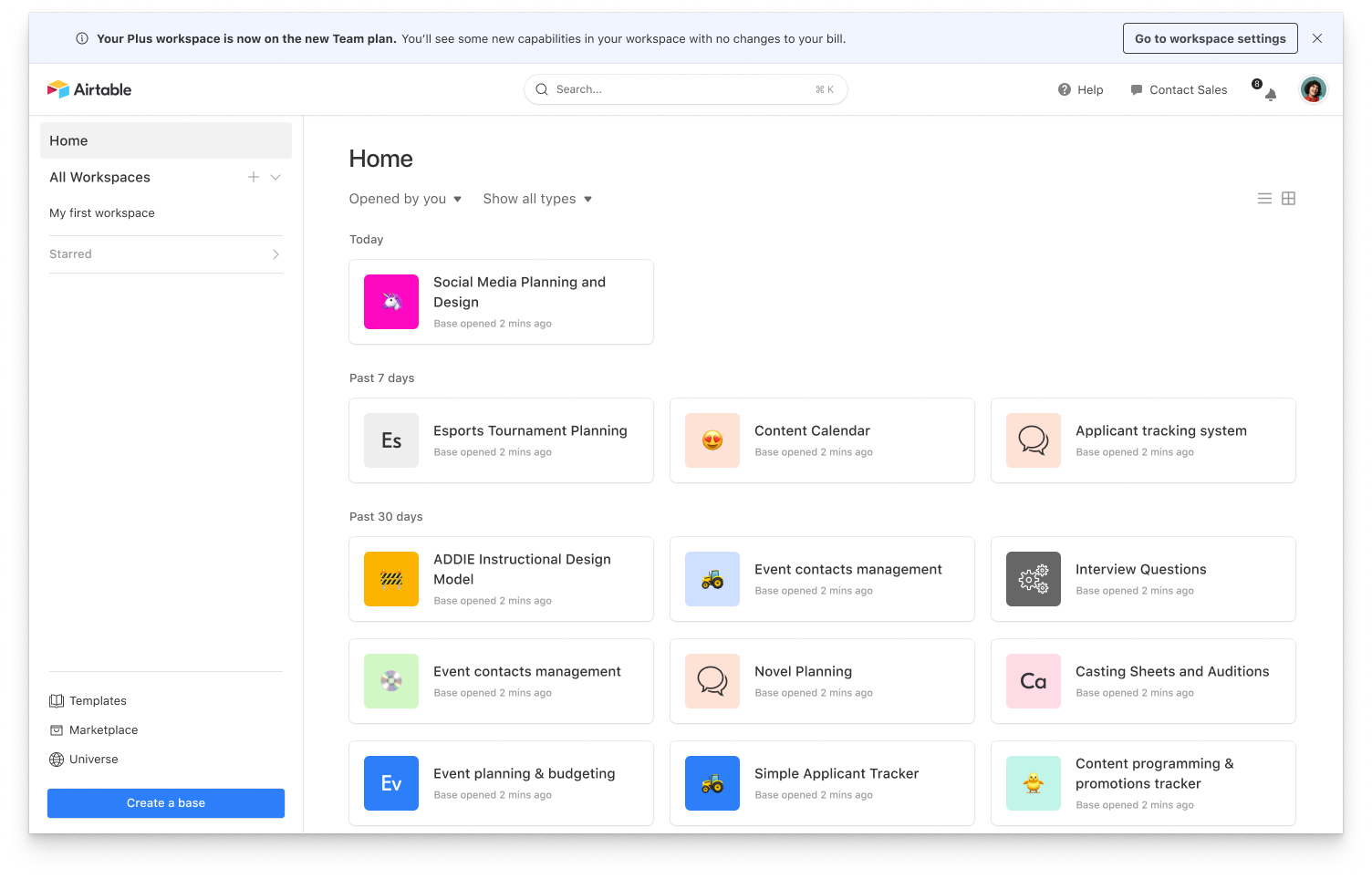
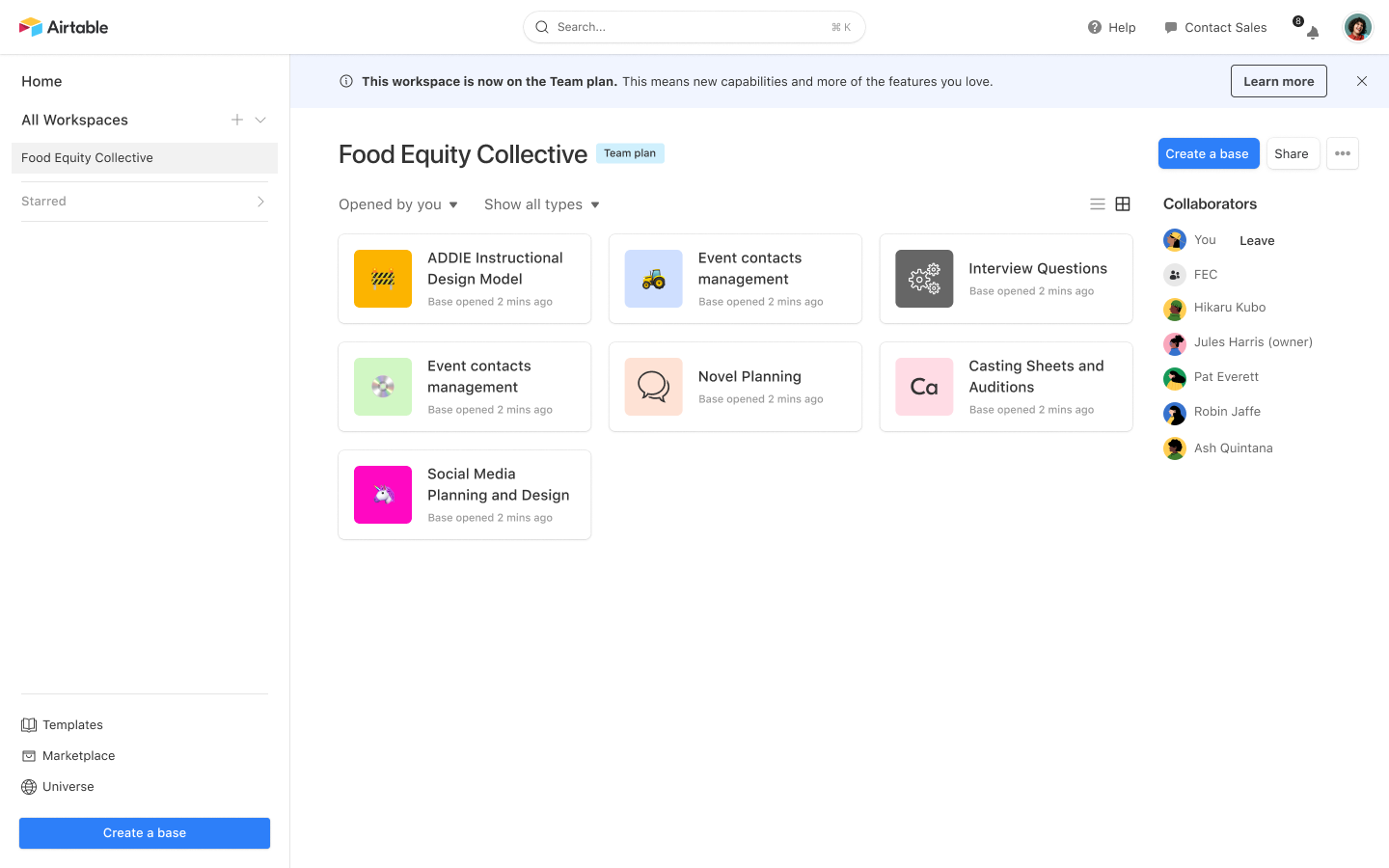
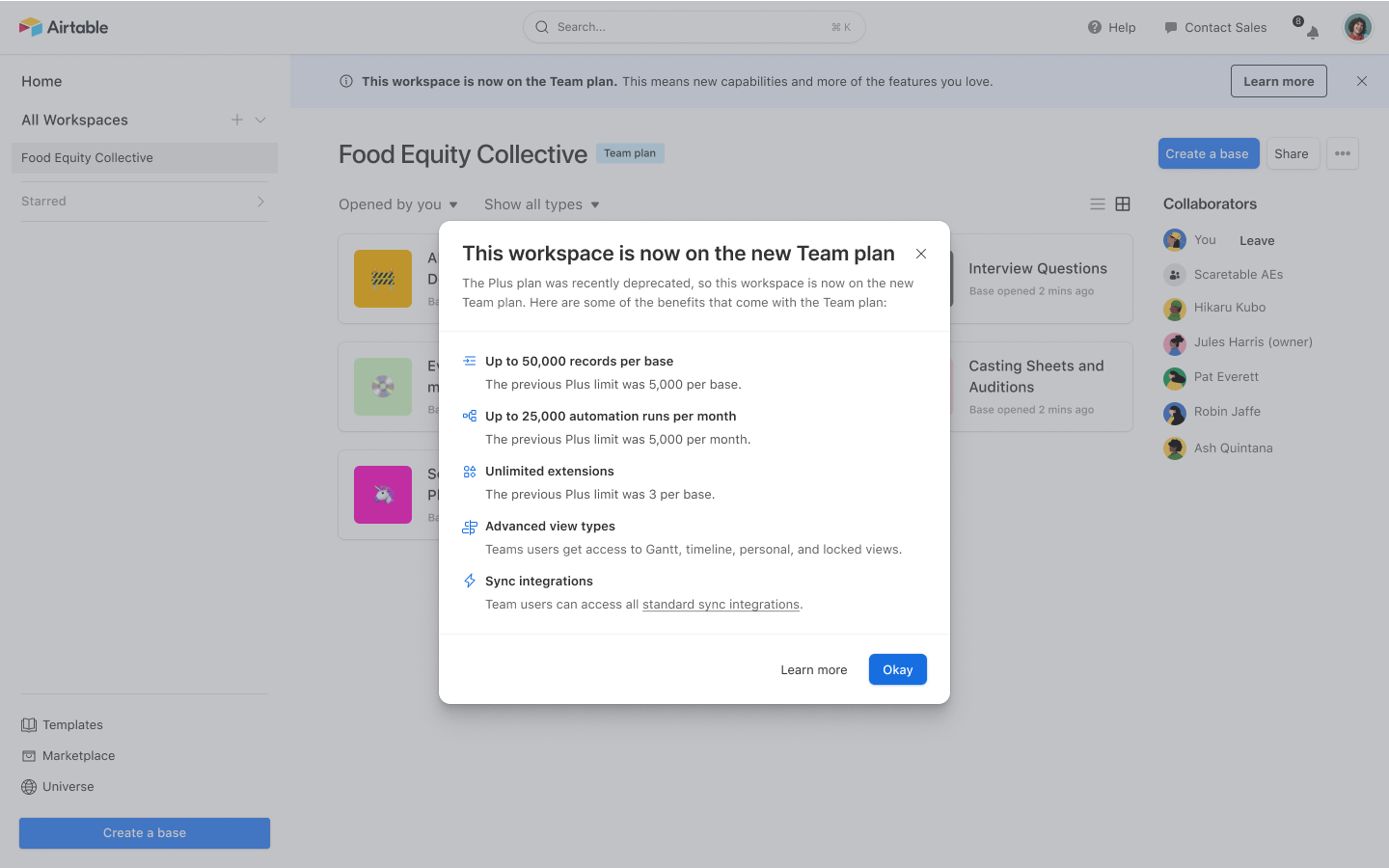
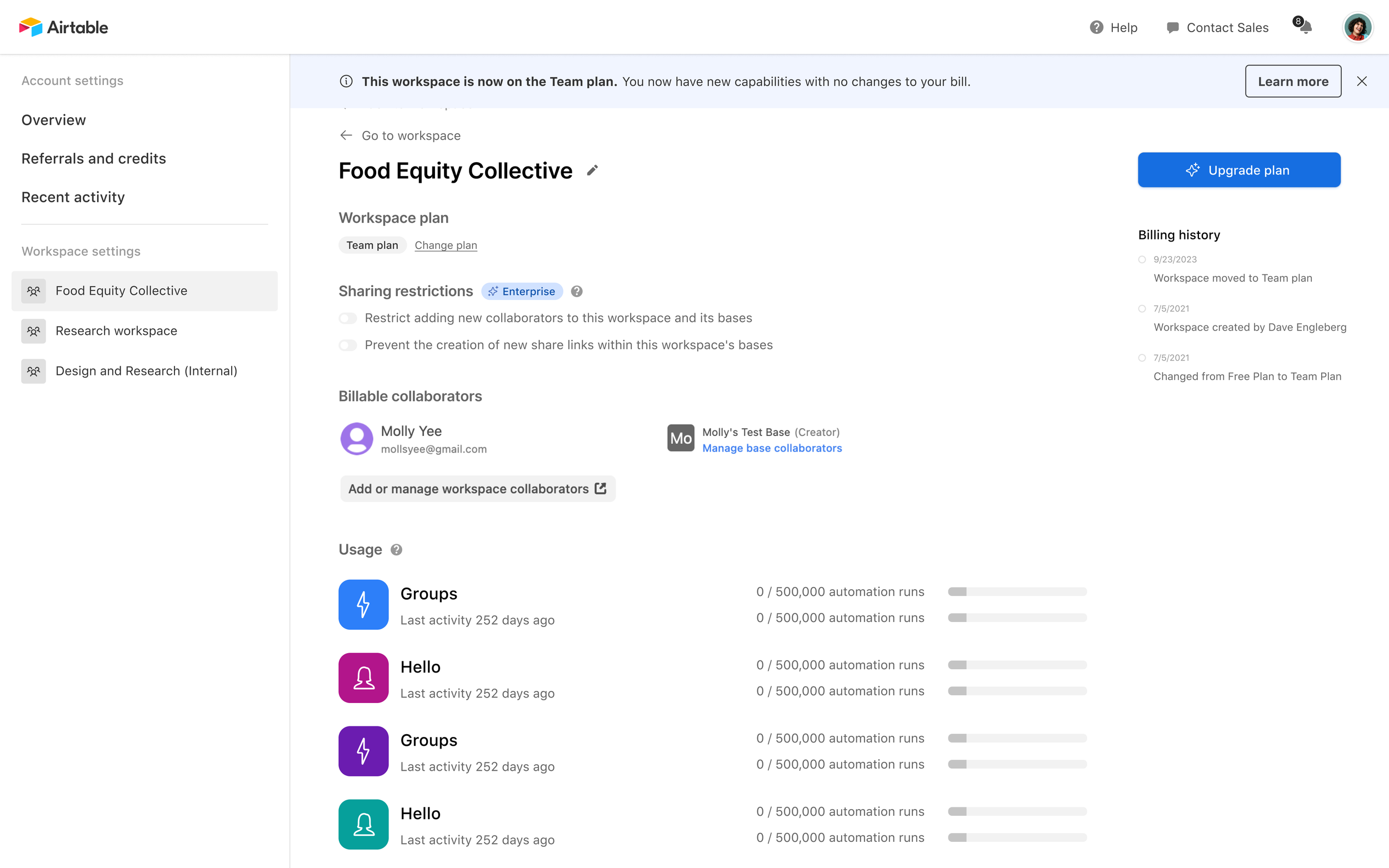
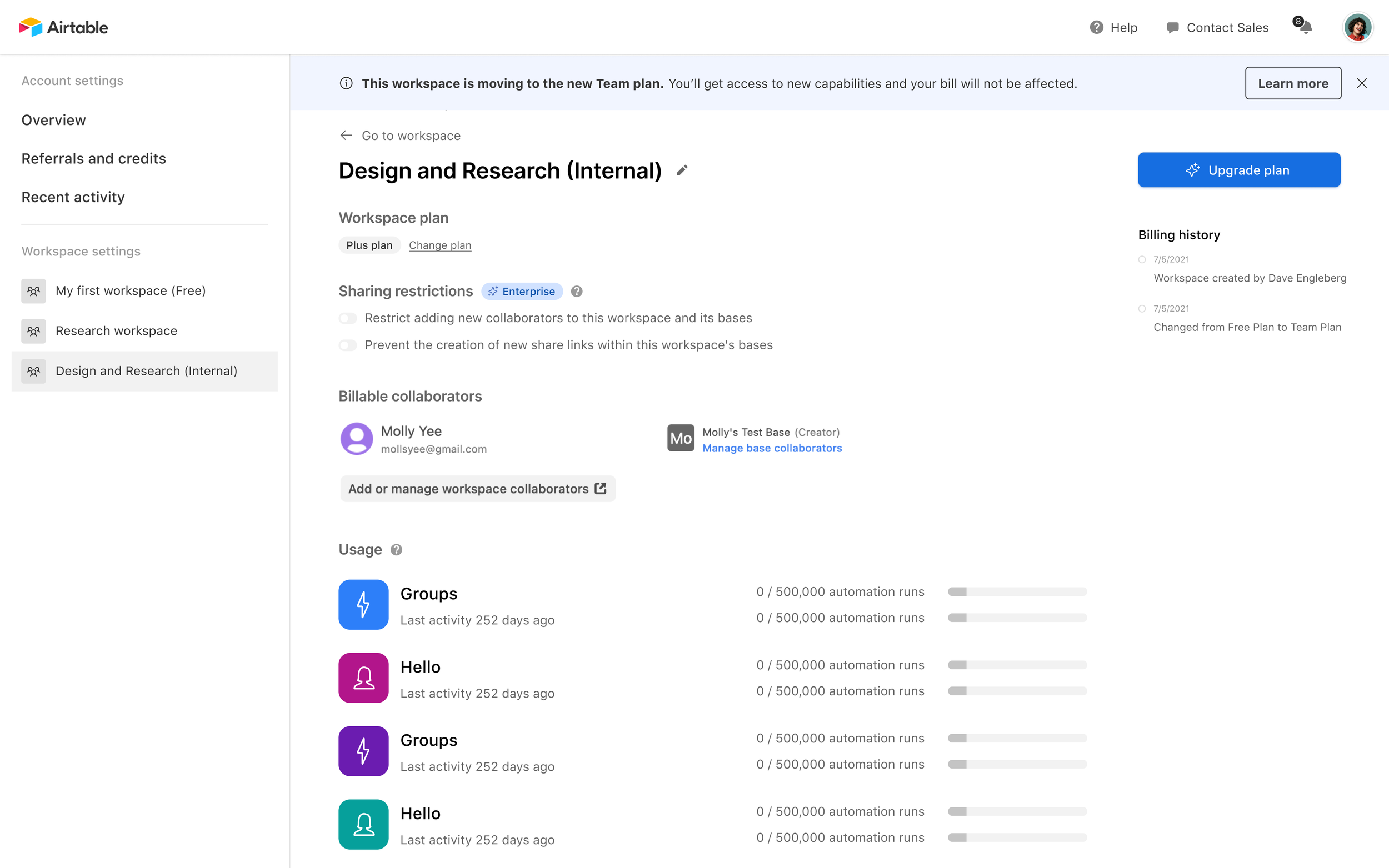
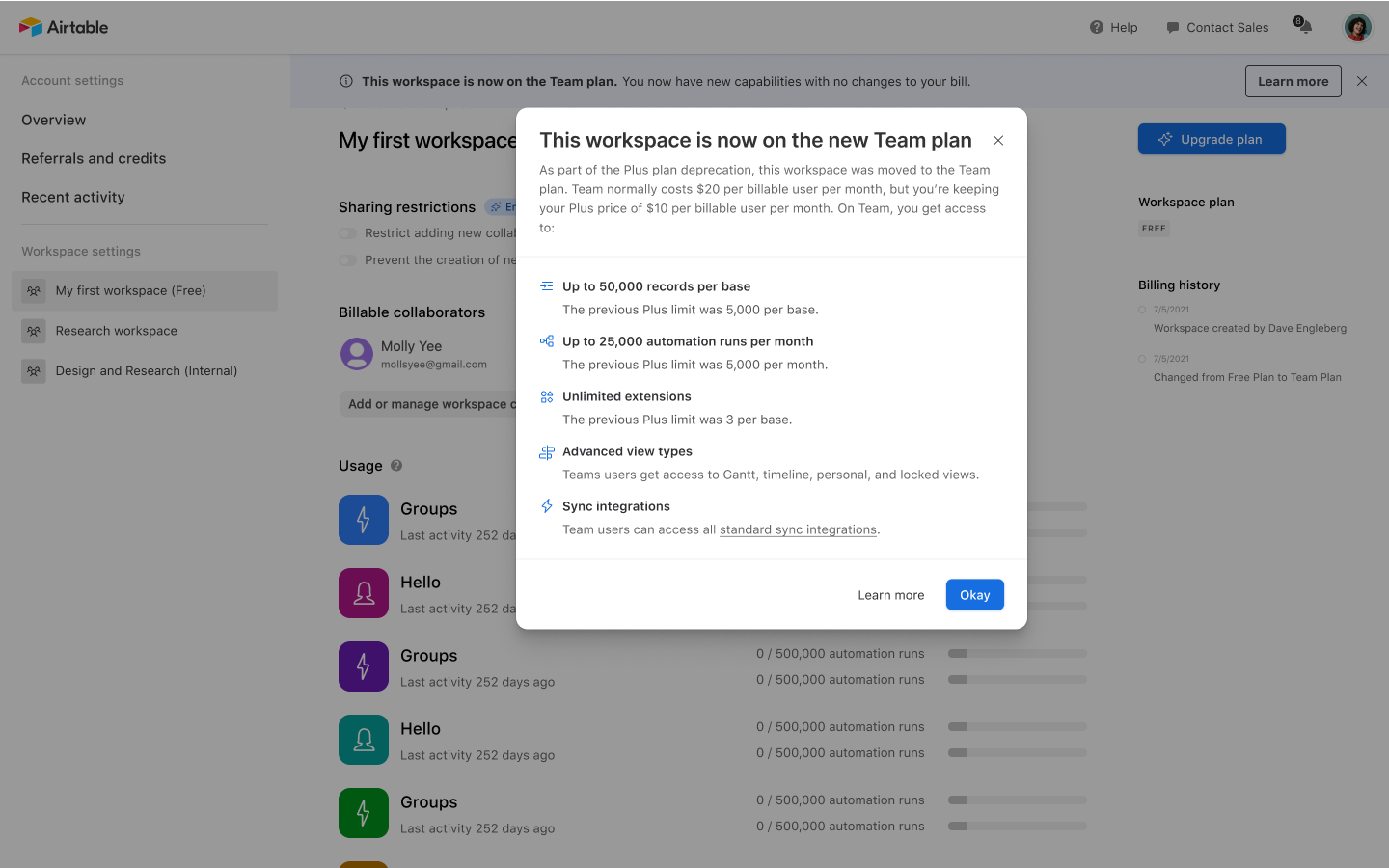
Because we were taking features away from customers and imposing new limits, these migration flows were sensitive and high-visibility—I worked through several rounds of feedback from senior stakeholders across product, marketing, legal, and eng to mitigate risk and preserve as much customer trust as possible. The Plus plan migration was the most sensitive, as we were deprecating these customers’ plan and initially intended to increase their price per billable user after a grace period. Leadership decided at the last minute to let Plus customers keep their current price, so I included both versions of that informational dialog here.
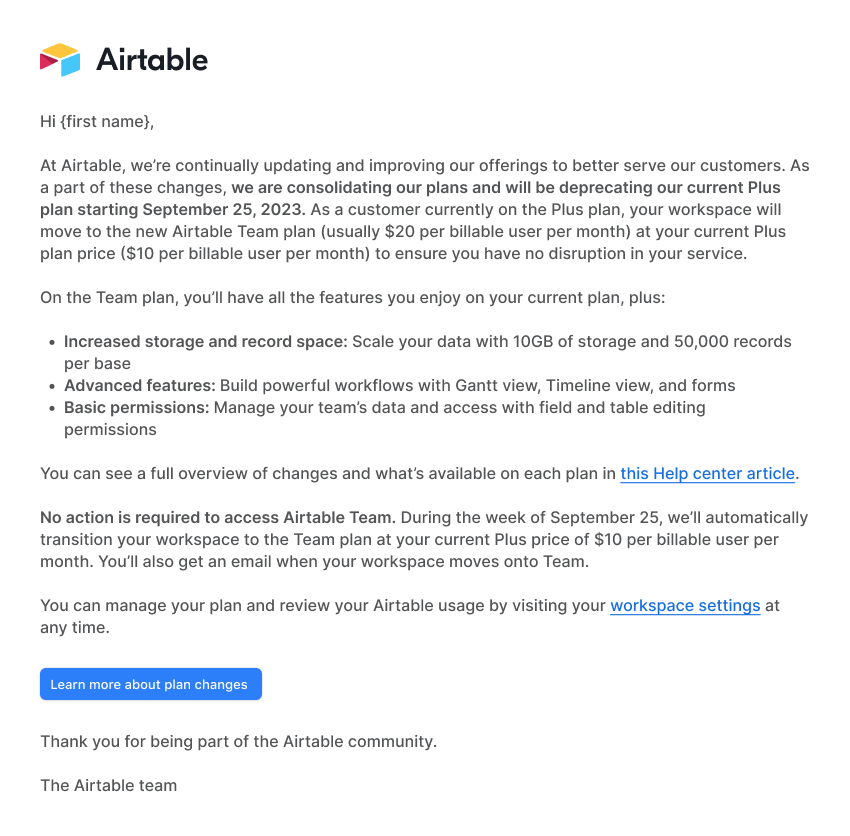
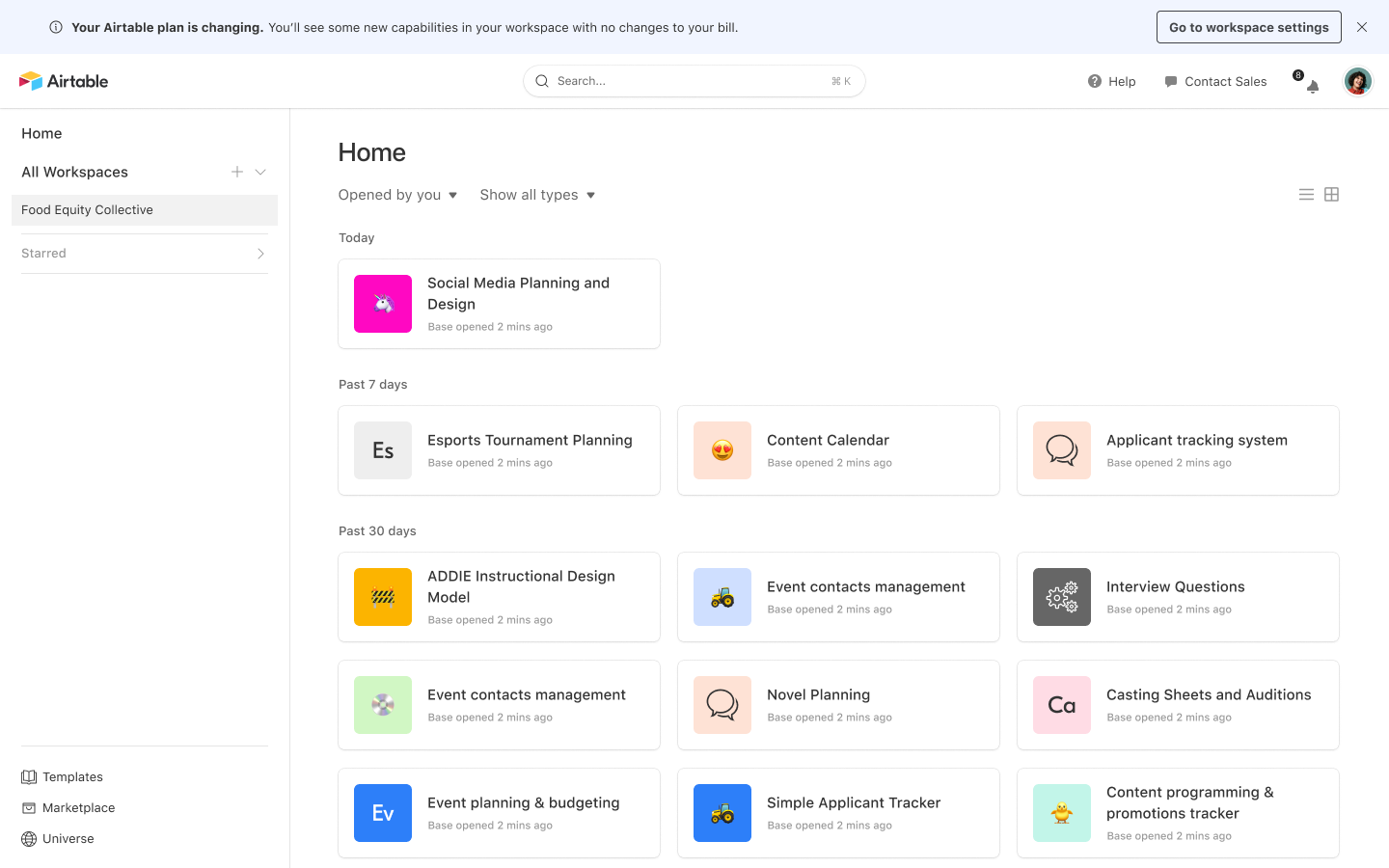
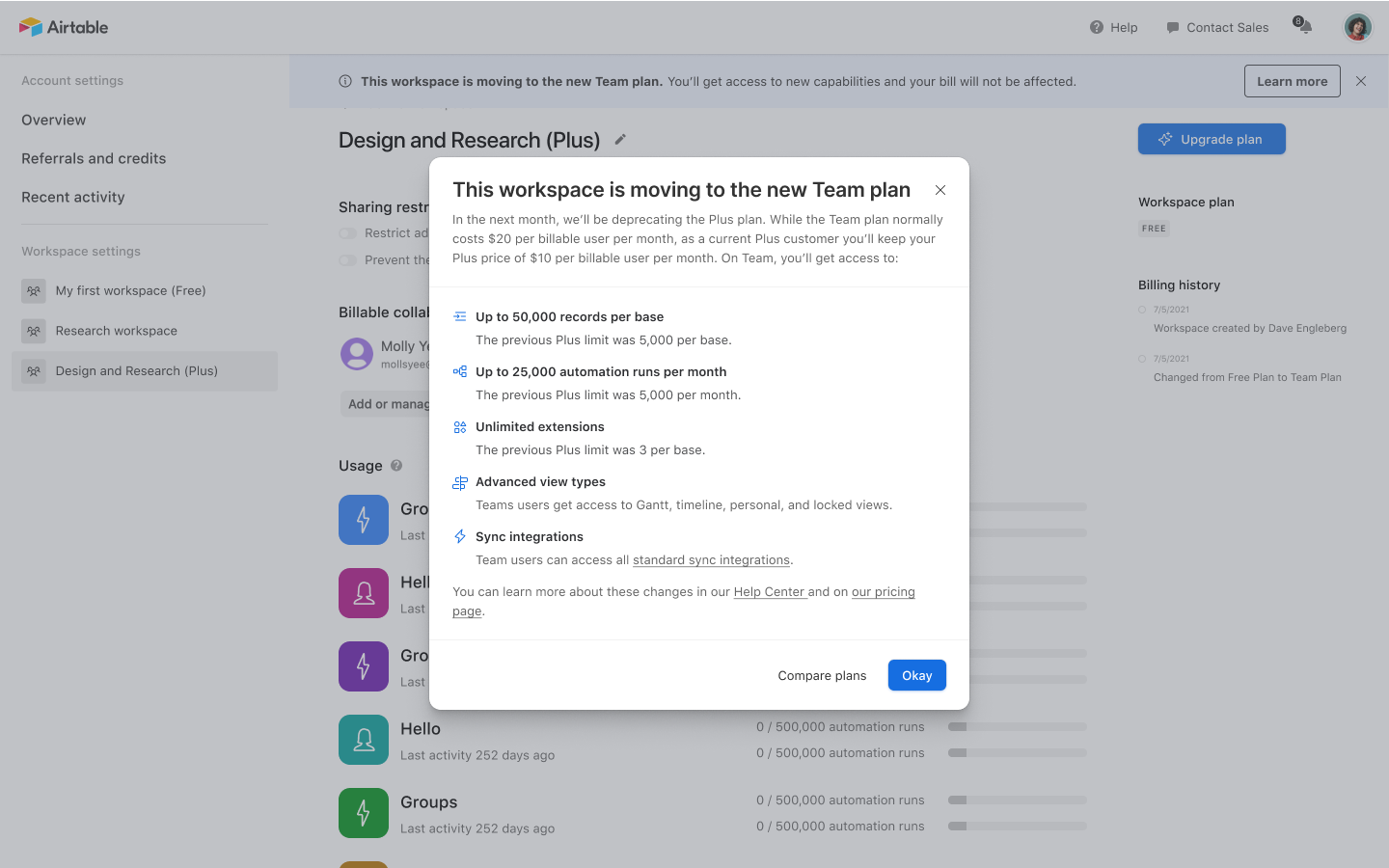
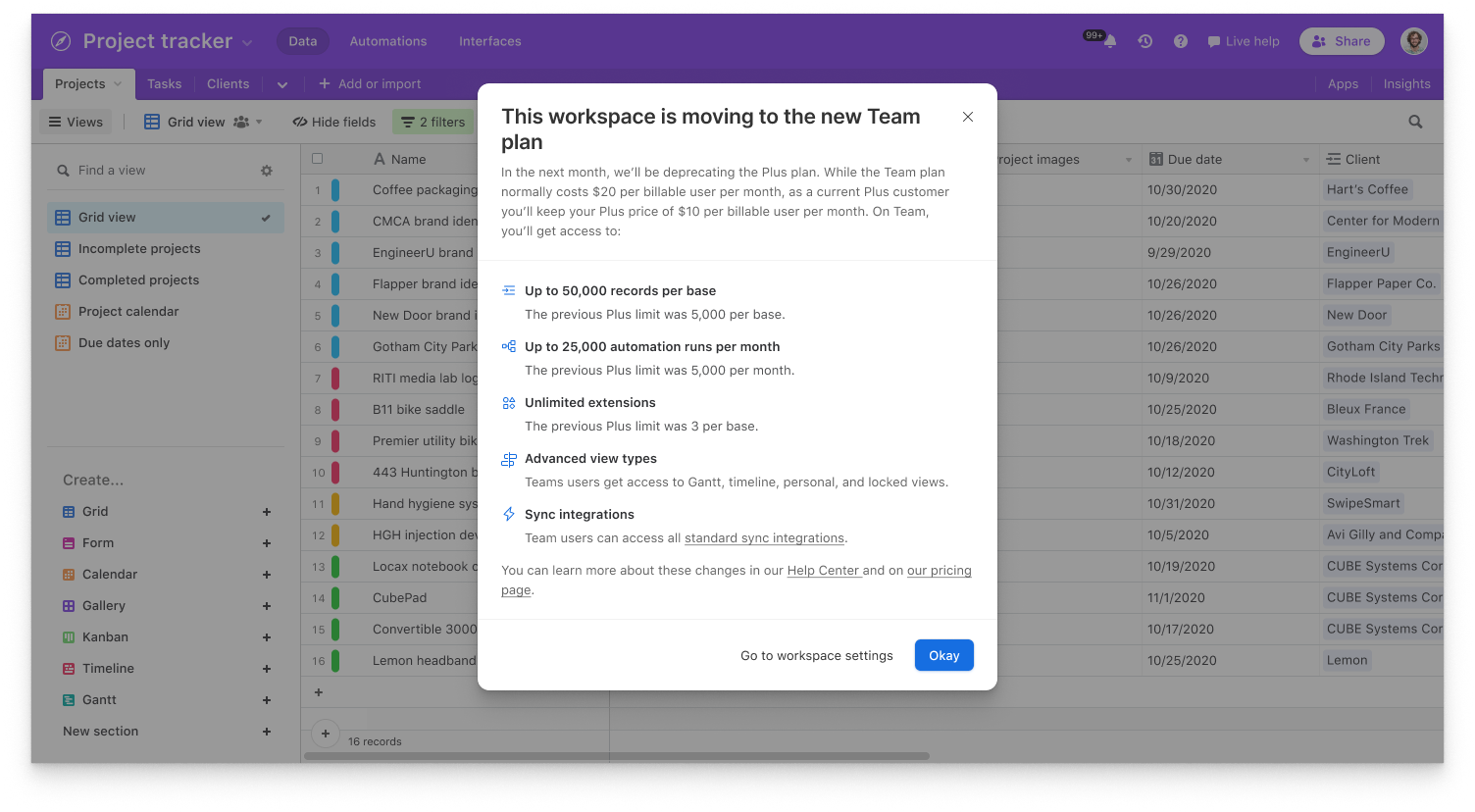
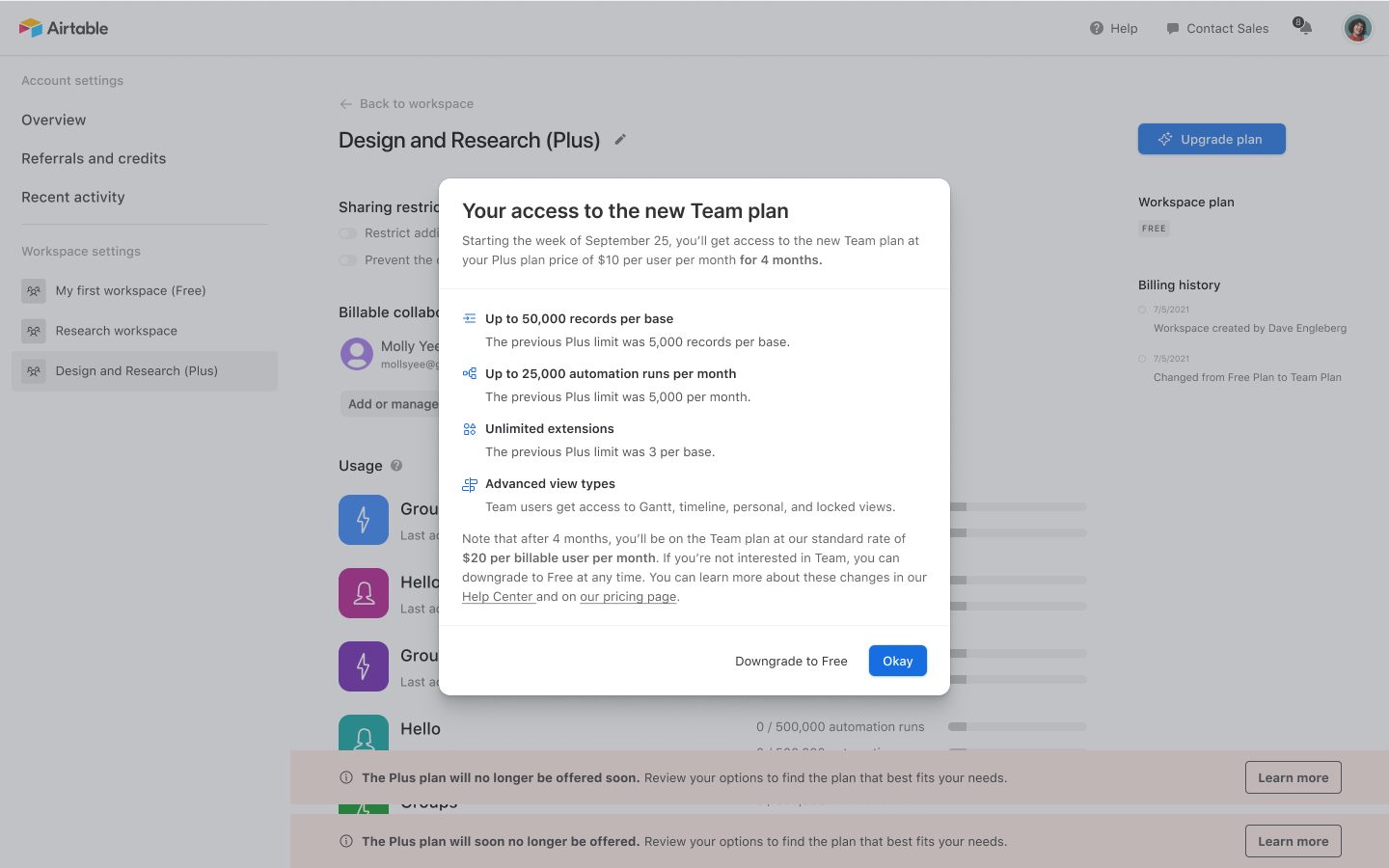
Initial Plus workspace settings dialog: Initially, the team was directed to give customers discounted access to the new Team plan, but eventually move them off the discount—which would double their bill. 🥲
Outcomes
*Note that I only have 3 weeks worth of metrics, as this launch happened in Aug 2023 and I was laid off mid-Sept 2023.
70% incremental ARR lift
We observed a 70% incremental lift in annual recurring revenue from upgrades to Business from our self-serve plans.
$1M ARR generated
Within 3 weeks of launch, the Business plan had already generated $1M in ARR.
High-conversion flow
Users reported no major UX issues in the onboarding flow, and 15% of all our customers with Airtable organizations were on the Business plan within 3 weeks of launch.